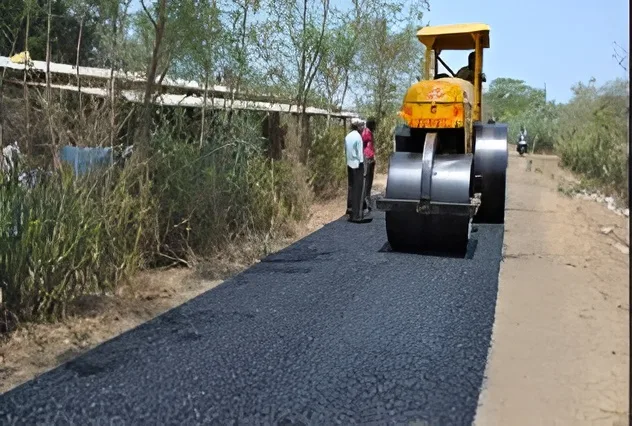
TechGlass Grid is an asphalt reinforcement geogrid manufactured from glass fiber rovings designed to provide high tensile strength at low strain. The grid includes a protective coating and a self-adhesive backing intended to secure it to the prepared pavement surface during installation.
The product is designed to help control reflective cracking in asphalt overlays and improve load distribution within pavement layers. According to the supplied product information, TechGlass Grid is thermally and chemically stable at bituminous mix temperatures up to 230°C and is resistant to de-icing salts, petroleum products, and bitumen. Confirm the applicable limits and installation requirements against the current technical data sheet before specifying the product.
Features
Solutions
Success Stories
Resources
High tensile strength at low strain
Glass fiber reinforcement is designed to provide tensile resistance with limited elongation, helping manage movement between pavement layers.
Reflective crack mitigation
Intended to reduce the propagation of cracks from an existing pavement into a new asphalt overlay.
Self-adhesive backing
Helps secure the grid to a properly prepared pavement surface during installation and paving operations, following the approved installation procedure.
Temperature resistance
The source states stability at bituminous mix temperatures up to 230°C. Confirm this limit and any required handling precautions in the product documentation.
Resistance to selected chemicals
The source identifies resistance to de-icing salts, petroleum products, and bitumen. Verify specific exposure conditions and test evidence for the offered product.
Pavement stress management
The grid is intended to help distribute traffic-induced stresses and mitigate interlayer cracking as part of a designed pavement rehabilitation system.
Potential maintenance benefits
By helping control reflective cracking, the product may support longer-lasting pavement rehabilitation. Actual service-life and cost outcomes depend on pavement condition, design, installation, and traffic.
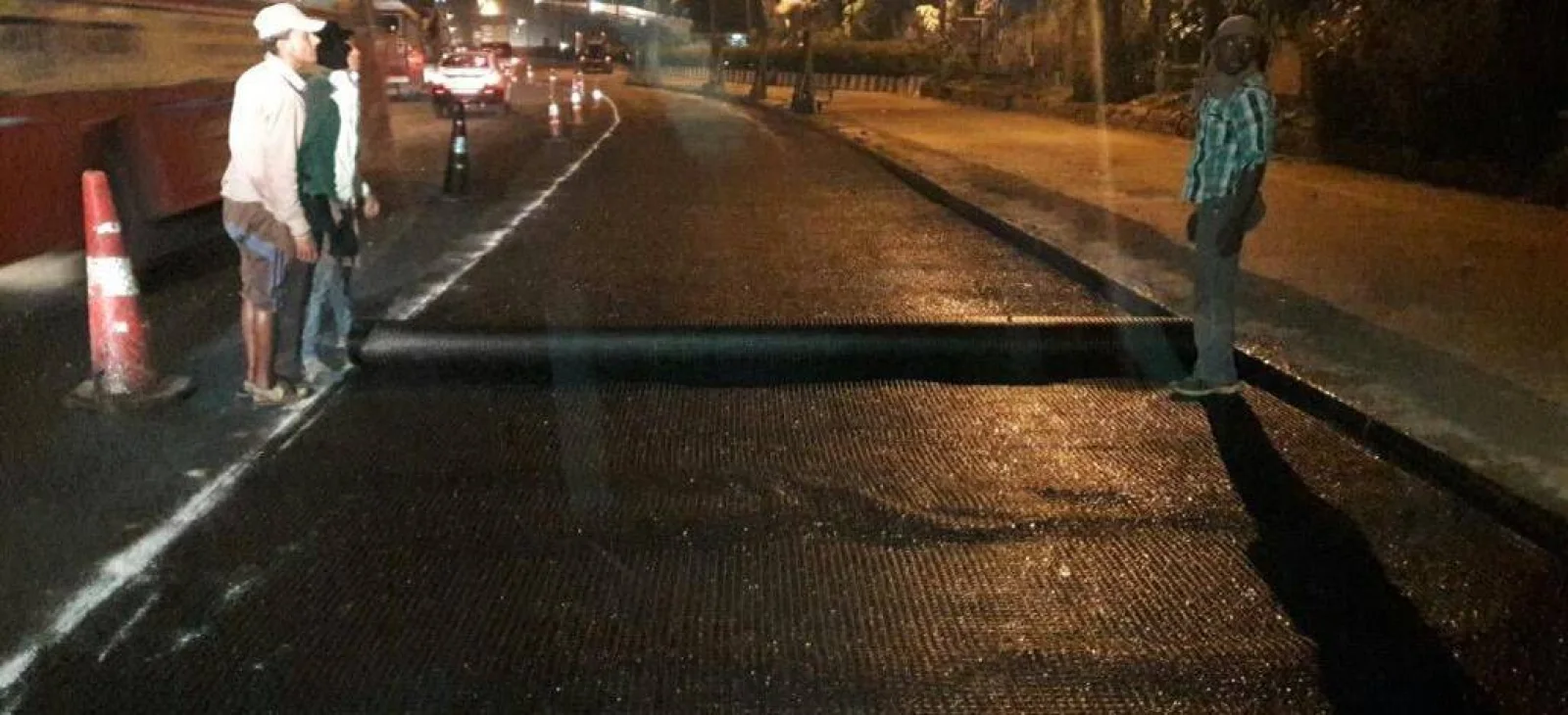
Cracks and joints in an existing pavement can move under traffic loading and temperature changes. When an asphalt overlay is placed over that surface, the movement can lead to reflective cracking in the new layer. TechGlass Grid is installed between pavement layers to help resist crack propagation and provide tensile reinforcement.
The glass fiber grid provides reinforcement at low strain, while the protective coating and self-adhesive backing help maintain the grid’s position and bond within the pavement system. The effectiveness of the interlayer depends on pavement condition, surface preparation, adhesive or tack-coat requirements, overlaps, installation method, overlay design, and field conditions.
Advanced asphalt reinforcement solution providing crack mitigation, load distribution, pavement strengthening, and extended service life for transportation infrastructure.
TechGlass Grid can be considered for pavement systems where glass fiber reinforcement is required to help distribute traffic-induced stresses and improve the performance of an asphalt overlay. The pavement design should determine whether the product is suitable for the existing conditions.
Applications
For rehabilitation projects where existing cracks may propagate into a new overlay, TechGlass Grid is designed to help mitigate reflective cracking. The crack condition, existing pavement structure, surface preparation, and planned overlay should be evaluated before use.
Applications
TechGlass Grid may be incorporated into an approved asphalt rehabilitation design to reinforce the interlayer and help manage cracking and traffic-related stresses. Performance depends on the condition of the existing pavement and the complete rehabilitation system.
Applications
Placed between pavement layers, the grid provides tensile reinforcement intended to help manage stress transfer and reduce crack propagation. Installation and bonding details should follow the product instructions and project specifications.
Applications
The product can be considered for selected transportation pavement projects where an asphalt reinforcement interlayer is specified and the product’s verified properties meet project needs.
Applications
 European Conformity (CE)
 ISO 9001

Provide the current installation manual covering surface preparation, grid placement, overlaps, bonding requirements, construction traffic, and asphalt paving operations applicable to the approved product system.
Link to relevant TechGlass Grid installation or pavement-rehabilitation videos if available. Confirm that the content matches the product and the intended application before publishing.
Connect with our engineering team for expert guidance
TechGlass Grid is a glass fiber asphalt reinforcement geogrid designed to provide high tensile strength at low strain. It includes a protective coating and self-adhesive backing and is intended for use between pavement layers to help mitigate reflective cracking.
Cracks in an existing pavement can propagate into a new asphalt overlay as traffic and temperature changes cause movement. TechGlass Grid provides tensile reinforcement within the interlayer and is designed to help reduce this propagation. Results depend on pavement condition, installation, and the rehabilitation design.
The source product information states that TechGlass Grid is manufactured from glass fiber rovings. It also describes a protective coating and self-adhesive backing. Refer to the product’s technical documentation for the exact construction details.
Tensile strength describes the resistance to pulling forces, while strain describes deformation under load. The source describes TechGlass Grid as providing high tensile strength at very low strain, a combination intended to reinforce the pavement interlayer while limiting elongation.
The self-adhesive backing is intended to help secure the grid to the prepared pavement surface during installation. Surface preparation, application conditions, and any additional bonding materials should follow the approved installation instructions.
The source states that TechGlass Grid is thermally stable at bituminous mix temperatures up to 230°C. Confirm this stated limit, the measurement basis, and required installation precautions using the current technical data sheet and installation manual.
The source product information identifies resistance to de-icing salts, petroleum products, and bitumen. Confirm the product-specific evidence and applicable exposure limits before relying on these properties in project specifications.
The source lists roads and highways, airport pavements, industrial yards, asphalt overlays, pavement rehabilitation, road widening, flexible pavements, heavy-traffic corridors, logistics and port facilities, runways, taxiways, and freight corridors. Suitability depends on the project’s design and specified performance requirements.
Airport pavements are listed as an application in the source material. Any use on runways or taxiways should be reviewed against the applicable airfield pavement design, operating loads, construction requirements, and project specifications.
The source describes the protective coating and interlayer system as providing moisture protection. Do not assume that the grid alone forms a complete waterproofing membrane. Confirm the product’s tested water-barrier performance and the approved pavement system before making a waterproofing claim.
No. The product is designed to help mitigate reflective cracking, but it cannot guarantee that all cracking will be prevented. The outcome depends on the existing pavement, crack movement, surface preparation, installation, overlay thickness and design, traffic, and environmental conditions.
The pavement surface should be assessed and prepared according to the approved installation procedure. The project team should confirm substrate condition, cleaning, bonding requirements, placement, overlaps, construction traffic restrictions, and asphalt paving sequence from the current installation manual.
Review the existing pavement condition, crack pattern, planned overlay, traffic and temperature conditions, surface preparation, bonding requirements, product properties, and project specifications. The design team should confirm that the product is suitable for the proposed rehabilitation system.
Refer to the current TechGlass Grid technical data sheet, approved product brochure, installation manual, and relevant videos provided by Techfab USA. Confirm that the documents relate to the product being specified.