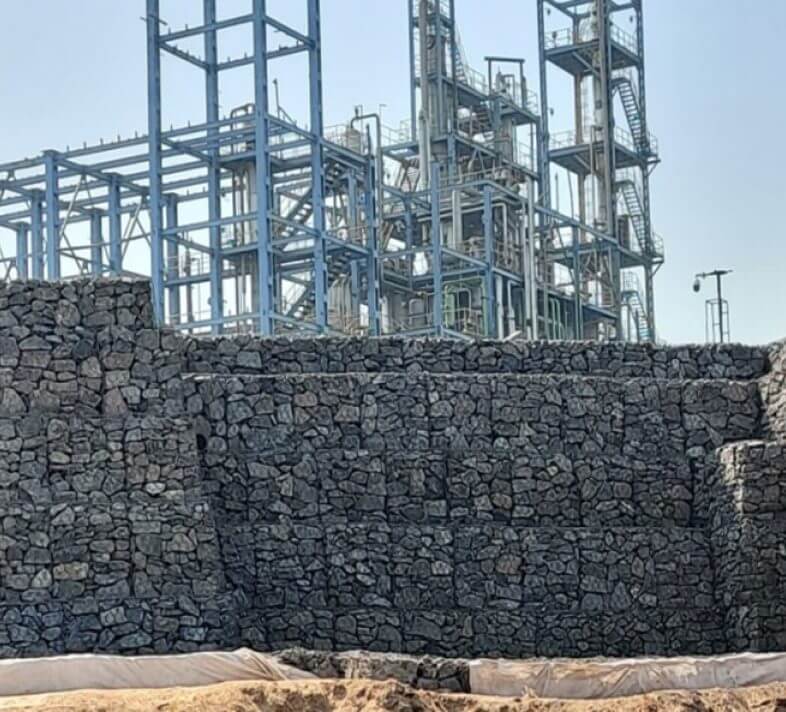
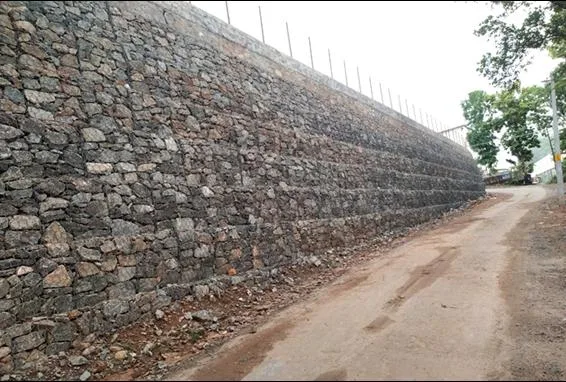
TechFab Metal Gabions are rectangular, compartmented baskets made from double-twisted, hexagonally woven steel wire mesh. The wire is zinc galvanized and PVC coated, as described in the source product information. Internal diaphragms divide each basket into compartments and help limit stone movement within the structure.
Once assembled and filled with suitable natural stone at the jobsite, gabions form flexible, permeable structures used for earth retention, erosion control, and hydraulic protection. Their ability to accommodate some ground movement and allow water to drain through the structure can make them useful for retaining walls, river and channel protection, slope stabilization, and selected landscape applications. Final suitability depends on the site conditions and engineered design.
Features
Solutions
Success Stories
Resources
Double-twisted wire mesh
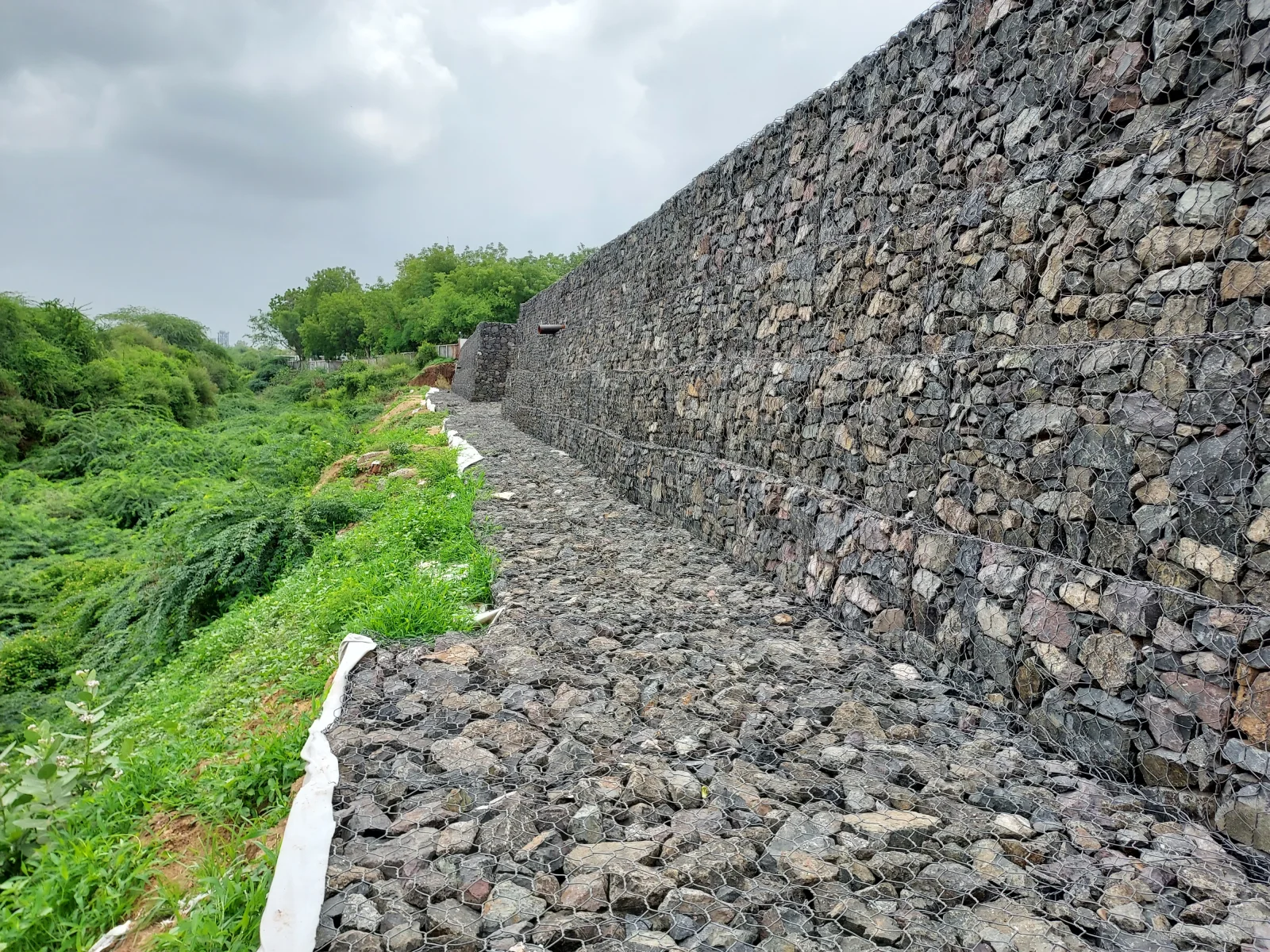
The hexagonal mesh structure forms the basket enclosure for the stone fill.
Galvanized and PVC-coated wire
The source describes zinc galvanizing and PVC coating. Confirm the exact coating specification and corrosion-protection data for the selected product.
Flexible structural system
Gabion structures can accommodate some differential settlement and ground movement; the amount depends on design, foundation conditions, and construction quality.
Permeability and drainage
Open mesh and stone fill allow water to pass through, which can reduce hydrostatic pressure compared with an impermeable system. Drainage design is still required.
Compartmented design
Internal diaphragms divide the basket and help limit movement of the stone fill between compartments.
Stone-filled construction
Natural stone is placed at the site to create a mass structure; stone grading, durability, and placement should meet the project specification.
Integration with the landscape
The open structure may allow vegetation to establish where site conditions, fill, and maintenance support it.
Potential construction efficiency
Use of suitable locally available stone may help manage material and transport costs, depending on the site and supply chain.
The wire mesh forms a containment basket for stone fill. Once the basket is assembled, filled, and closed according to the installation design, the stone mass provides weight and resistance within the retaining or protection system. The mesh confines the stone, while internal diaphragms help reduce stone migration inside the basket.
Because the structure is permeable, water can flow through the stone-filled mesh rather than being held back by an impermeable face. Gabions can also accommodate some ground movement, but foundation preparation, drainage, basket connections, stone selection, and overall stability must be addressed in the project design.
Innovative TechFab Metal Gabions solutions combining strength, flexibility, and durability for challenging geotechnical applications.
Stone-filled gabion baskets can be arranged to form retaining structures where a flexible, permeable system is appropriate. The design must account for retained soil, foundation conditions, surcharge loads, drainage, and overall wall stability.
Applications
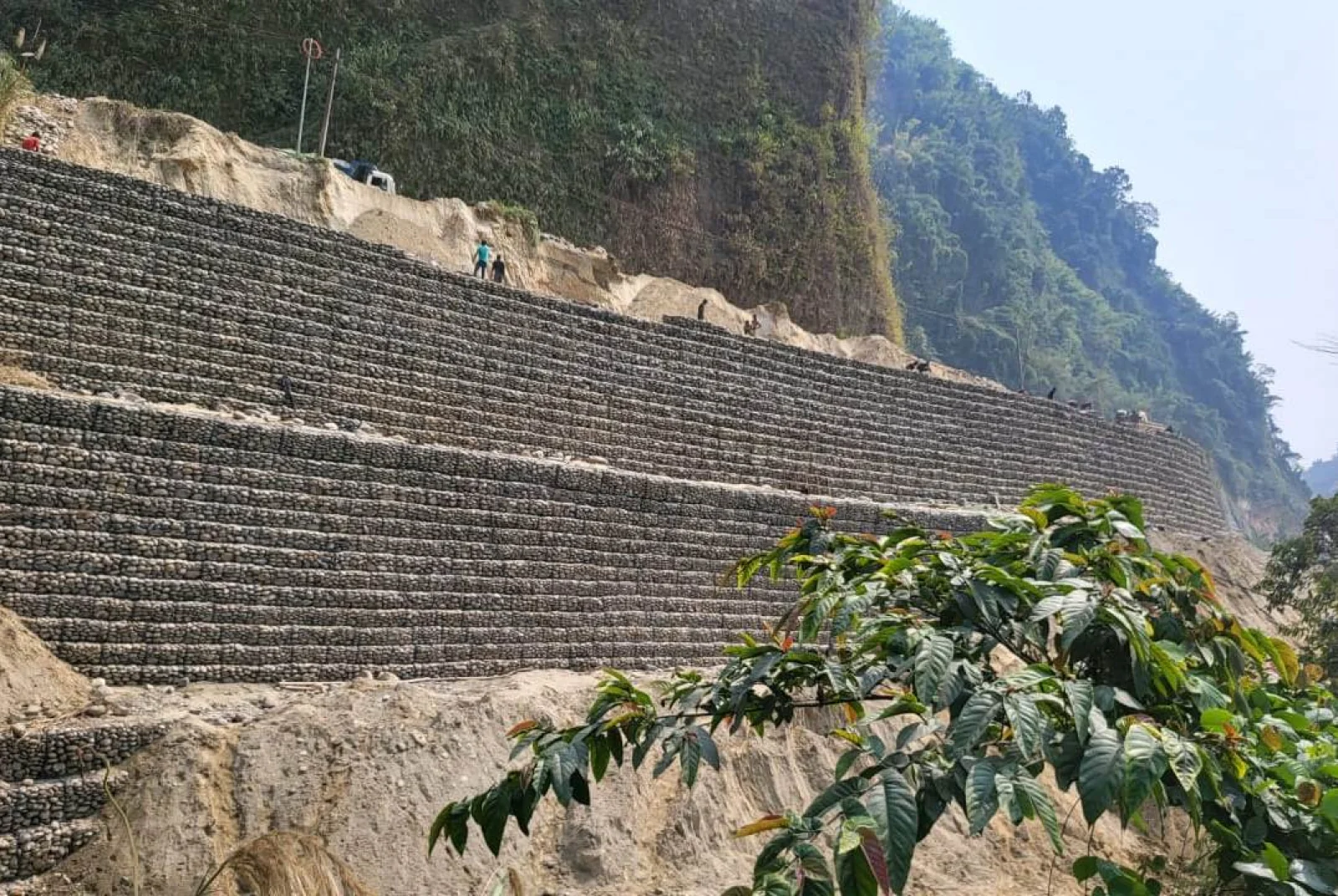
Gabions can be used in engineered river and channel works to protect banks and channel surfaces from erosion and help manage localized scour. Layout and stone sizing should be selected for the expected flow velocities, hydraulic loading, and channel conditions.
Applications
Gabion systems may be incorporated into slope protection and erosion-control designs where a stone-filled, permeable structure is suitable. The design should assess slope geometry, soil conditions, groundwater, drainage, and potential failure mechanisms.
The natural stone appearance of gabion baskets can be incorporated into landscape and site designs. Where gabions provide a structural function, the design should address stability, drainage, and the intended use of the structure.
 European Conformity (CE)
 European Technical Assessment (ETA)
 ISO 9001
 Bureau of Indian Standards (BIS)
 Geosynthetic Accreditation Institute (GAI-LAP)European Conformity (CE)European Technical Assessment (ETA)ISO 9001Bureau of Indian Standards (BIS)Geosynthetic Accreditation Institute (GAI-LAP)

Link to current installation guidance covering basket assembly, diaphragms, connections, stone filling, lid closure, foundation preparation, and placement within the designed structure.
Link to current TechFab Metal Gabion installation videos or relevant project demonstrations. Confirm that the resource matches the product and intended application before publishing.
Connect with our engineering team for expert guidance
A TechFab Metal Gabion is a rectangular basket made from double-twisted, hexagonally woven steel wire mesh. The wire is described in the source as zinc galvanized and PVC coated. The basket has internal diaphragms and is filled with natural stone at the jobsite to form a flexible, permeable structure.
The wire mesh contains the stone fill, while the weight of the stone mass contributes to the stability of the designed structure. Internal diaphragms help limit stone movement between compartments, and the open mesh allows water to pass through.
Gabion baskets are generally box-shaped units used for applications such as retaining walls, while gabion mattresses have a much lower height relative to their length and width and are commonly used for surface protection against erosion and scour. The appropriate form depends on the hydraulic and structural design.
It describes a hexagonal wire mesh in which wire pairs are twisted together at the mesh intersections. The specific mesh opening, wire diameter, and coating details should be checked in the product’s current technical documentation.
Internal diaphragms create separate compartments within the basket and help limit movement of stone fill from one section to another. This helps the basket retain its intended shape during filling and service.
Retaining walls are one of the stated applications. Gabion wall design must account for retained soil, foundation capacity, wall geometry, surcharge loads, drainage, internal stability, and overall stability. A qualified engineer should determine the appropriate configuration.
Riverbank protection and channel lining are listed applications. Gabions can form part of a designed erosion-control system, but stone size, basket placement, toe protection, flow conditions, and scour depth must be considered in the hydraulic design.
Gabions are listed for river and channel works and hydraulic structures. Their use in flood-related projects depends on the project design, hydraulic loading, foundation conditions, and the required level of protection. The product should not be treated as a complete flood-protection solution on its own.
Gabion structures can accommodate some differential settlement and ground movement because the wire-and-stone system is flexible. The amount of movement that can be accommodated depends on the design, foundation, basket connections, and site conditions.
Yes. The open mesh and stone fill form a permeable structure that allows water to pass through. Project drainage requirements and the potential for soil migration still need to be addressed in the system design.
The source specifies natural stone filled at the site but does not define stone size, grading, or durability requirements. These should be set by the project specification based on basket mesh opening, hydraulic conditions, handling, and design requirements.
The source identifies zinc galvanizing and PVC coating as the wire protection system. Confirm the specific coating details, thickness, applicable durability data, and suitability for the project exposure from the current technical data sheet.
The source highlights landscape integration and the potential for vegetation growth. Actual environmental outcomes depend on the site, stone source, water conditions, detailing, and whether vegetation can establish and be maintained. Environmental claims should be made in the context of the specific project.
Useful information includes the intended application, dimensions and layout, mesh opening, wire diameter and coating, stone grading, foundation and drainage details, hydraulic or retained-soil loads, and the applicable project specifications. Confirm product configuration and design with the current technical documentation.