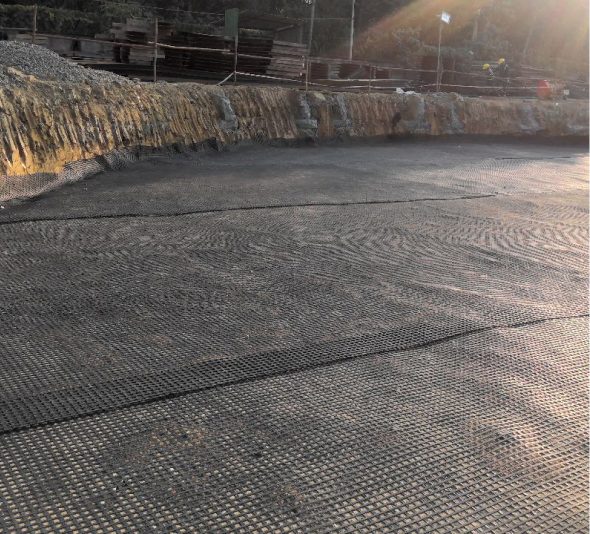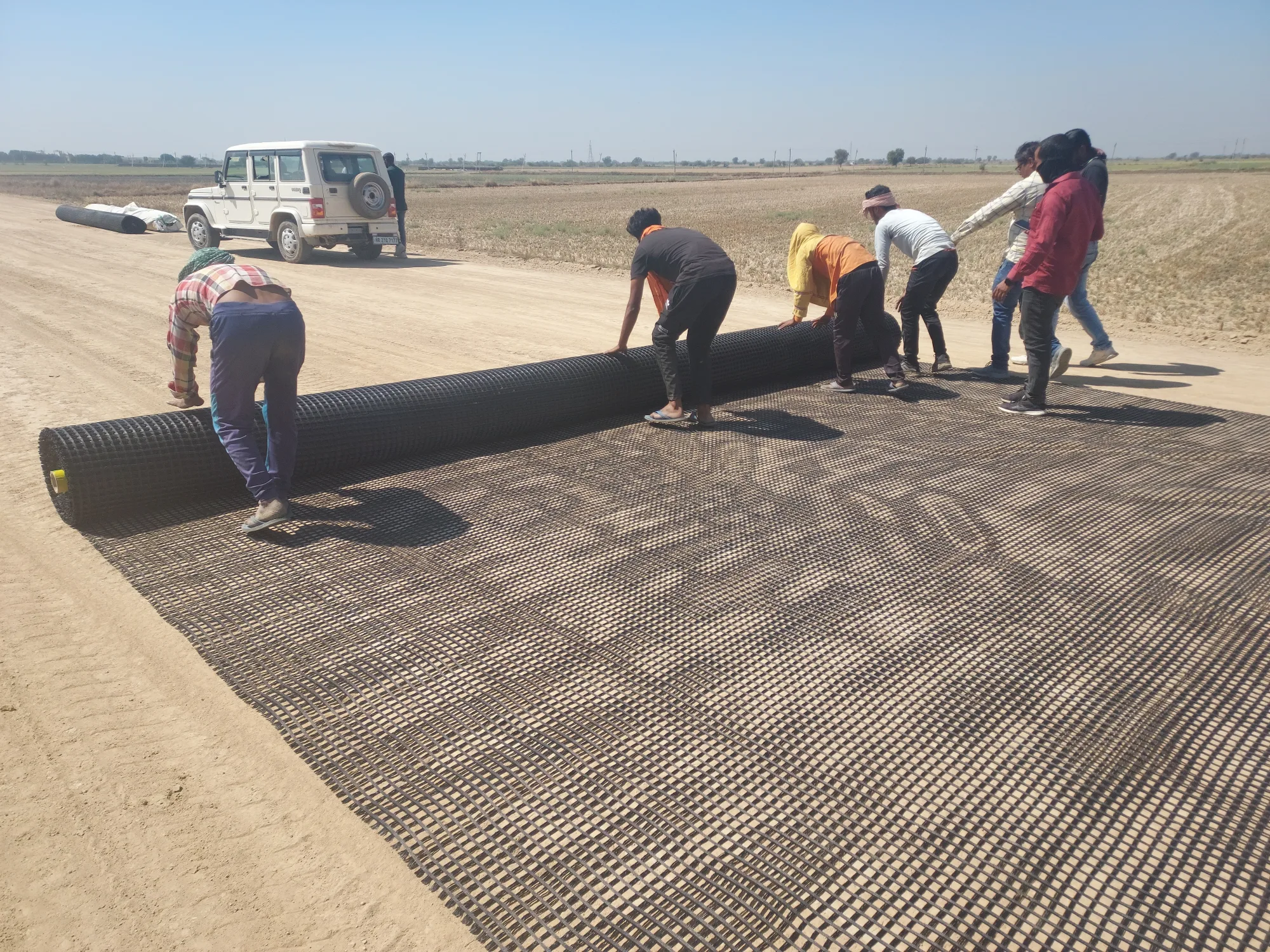
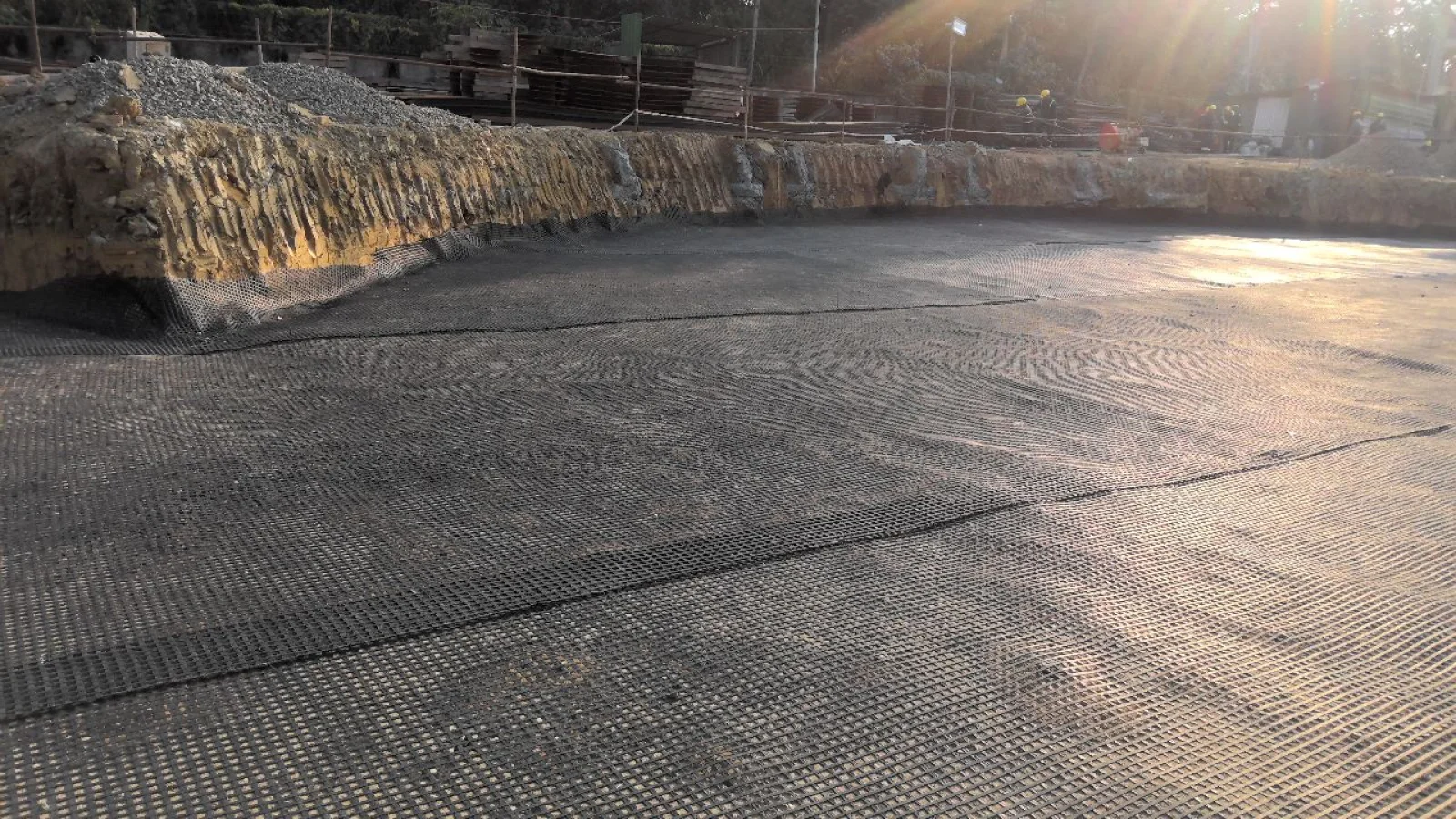
TechGrid® Polyester Biaxial Geogrid is a soil reinforcement product manufactured from premium polyester yarns with a protective PVC coating. Designed to provide tensile reinforcement in two directions, it can be incorporated into pavement, subgrade, and ground improvement systems where load distribution and ground stability are important.
For projects involving roadways, industrial access roads, container yards, rail trackbeds, or working platforms over weak subgrades, TechGrid can form part of an engineered reinforcement solution. Product selection should be based on site conditions, loading requirements, design criteria, and the properties documented in the applicable technical data sheet.

Features
Solutions
Success Stories
Resources
Tensile reinforcement in two directions
Provides reinforcement along both principal directions for applications requiring biaxial tensile resistance.
Pavement and ground performance
Can help manage deformation in properly designed pavement and ground improvement systems.
Soil and aggregate interaction
Helps confine surrounding soil or aggregate as part of a designed reinforcement system.
Protective PVC coating
Covers the polyester yarns and helps protect them from mechanical damage and environmental exposure.
UV and chemical resistance
The source product information identifies these properties; confirm applicable product-specific evidence and exposure limits in the technical documentation.
Practical handling
The lightweight, flexible construction can help with handling and placement during installation.
Potential project efficiency
When appropriately designed and installed, reinforcement may help manage deformation and maintenance needs. Outcomes depend on site and design conditions.
In pavement and ground improvement applications, loads from traffic, equipment, or stored materials are transferred through pavement layers or the ground. TechGrid Polyester Biaxial Geogrid provides tensile reinforcement in two directions and can interact with surrounding aggregate or soil to help constrain movement and distribute loads within a properly designed system.
Its contribution to performance depends on the subgrade, aggregate characteristics, loading, installation, and overall design. The geogrid should therefore be selected and installed according to project-specific engineering requirements.
Innovative TechGrid PET Biaxial Geogridss for pavement and ground applications
TechGrid can be incorporated into pavement base and subbase systems to help improve load distribution and control deformation under repeated traffic loading. Its use may be considered where pavement performance, rutting, or subgrade support are project concerns.
Applications
Rail trackbeds experience repeated dynamic loading. TechGrid may be considered as part of an engineered trackbed stabilization system where reinforcement and improved interaction with surrounding material are required.
Applications
For industrial and developed sites, geogrid reinforcement can be incorporated into engineered ground improvement systems to help manage deformation and support the performance of areas subjected to traffic, equipment, or storage loads.
Applications
A load transfer platform is an engineered layer used to spread applied loads over a supporting ground profile, including sites with weak or variable subgrade conditions. TechGrid can be incorporated into a designed platform to provide tensile reinforcement and help distribute loads.
Applications
 European Conformity (CE)
 ISO 9001
 Bureau of Indian Standards (BIS)
 Geosynthetic Accreditation Institute (GAI-LAP)
 National Accreditation Board for Testing and Calibration Laboratories (NABL)
 Bangladesh Small & Cottage Industries Corporation (BSCIC)European Conformity (CE)ISO 9001Bureau of Indian Standards (BIS)Geosynthetic Accreditation Institute (GAI-LAP)National Accreditation Board for Testing and Calibration Laboratories (NABL)Bangladesh Small & Cottage Industries Corporation (BSCIC)


Consult the applicable installation guidance for pavement reinforcement, subgrade stabilization, and ground improvement.
View available installation guidance for pavement and ground reinforcement applications.
Connect with our engineering team for expert guidance
TechGrid Polyester Biaxial Geogrid is a soil reinforcement product made from premium polyester yarns with a protective PVC coating. It is designed to provide tensile reinforcement in two directions and can be considered for pavement reinforcement, subgrade stabilization, and ground improvement applications.
Biaxial means the geogrid is designed to provide tensile reinforcement in two directions. This can be useful where reinforcement is required along both principal directions. Check the product’s technical data sheet for its actual properties.
When incorporated into a properly designed pavement system, a biaxial geogrid can interact with surrounding aggregate and provide tensile reinforcement. This may help control movement and distribute loads through the reinforced layer. Results depend on pavement design, subgrade, aggregate, traffic, and installation quality.
The source product information identifies highway pavements and industrial access roads as applications. Suitability for a particular project should be confirmed by reviewing site conditions, loading requirements, design criteria, and the applicable technical data.
Container yards and storage yards are listed applications. These areas can experience concentrated and repeated loads, so the reinforcement layout and pavement or ground design should be developed for expected loading and site conditions.
A load transfer platform is an engineered layer that helps spread loads over the supporting ground. It may be used where subgrade conditions are weak or variable. TechGrid can be included as reinforcement when the project design calls for it.
Railway trackbed stabilization is listed as an application in the source material. Suitability depends on the track structure, ballast and subgrade properties, dynamic loading, and railway project specifications. Confirm product properties against design requirements before use.
The PVC coating provides a protective layer over the polyester yarns and is intended to help protect them from mechanical damage and environmental exposure. Product-specific durability and chemical-resistance claims should be confirmed against current technical documentation.
The source material describes the product as supporting pavement performance, load distribution, and ground stabilization. In an appropriately designed system, geogrid reinforcement may help manage deformation. Actual outcomes depend on the pavement or ground design, materials, loading, and site conditions.
A uniaxial geogrid provides its primary tensile reinforcement in one direction and is often considered for reinforced soil walls, embankments, and slopes. A biaxial geogrid provides tensile reinforcement in two directions and may be considered for pavement, aggregate-base, and ground stabilization applications. Selection depends on the design and required reinforcement properties.
No single geogrid is suitable for every site. Selection depends on subgrade strength, soil and aggregate properties, groundwater, applied loads, construction methods, and project specifications. A qualified engineer should evaluate the application and confirm product suitability.
Refer to the TechGrid Polyester Biaxial Geogrid technical data sheet and approved product documentation for available specifications, test data, and supporting information. Confirm that the product meets project design requirements before installation.
The source material identifies roads and highways, railways, mining, and power and heavy industry as relevant sectors. Specific use should be confirmed against the product’s verified properties and the project’s engineering requirements.
Useful information includes the intended application, subgrade and aggregate properties, expected traffic or equipment loads, pavement or platform design, site conditions, and project specifications. Verify the required tensile properties and other relevant characteristics against the technical data sheet.