Home / Success Stories / Use of TechGrid Biaxial Geogrid as Part of Ground Improvement System Beneath DCU Feed Storage Tank at Numaligarh Refinery Expansion Project, Assam
Golaghat, Assam, India | Numaligarh Refinery Limited
Numaligarh Refinery Limited (NRL), a public-sector enterprise under the Ministry of Petroleum and Natural Gas and a subsidiary of Bharat Petroleum Corporation Limited, operates a refinery in Assam’s Golaghat district. Commissioned in 2000, the refinery initially had a crude-processing capacity of 3 million tonnes per annum (MMTPA) and was established to process Assam’s indigenous crude oil.
To expand its operations, NRL initiated the Numaligarh Refinery Expansion Project (NREP), which includes the development of a new refinery with a crude-processing capacity of 6 MMTPA. This expansion will increase the refinery’s total processing capacity from 3 MMTPA to 9 MMTPA.
The project is integrated with a new crude oil pipeline connecting Paradip in Odisha to Numaligarh in Assam, along with a product pipeline from Numaligarh to Siliguri, where NRL operates a marketing terminal for product distribution.
The proposed storage tanks for the expanded refinery were planned in an area characterized by weak and compressible soil. Since these tanks are designed to store large volumes of fluids at various stages of refinery operations, they impose substantial loads on the foundation soil.
Ensuring adequate bearing capacity and controlling settlement were therefore critical requirements before construction could begin. The initial ground improvement proposal involved the use of conventional stone columns. To further enhance the performance of the improved ground, the client decided to incorporate a geogrid layer between the stone blanket and the stone columns.
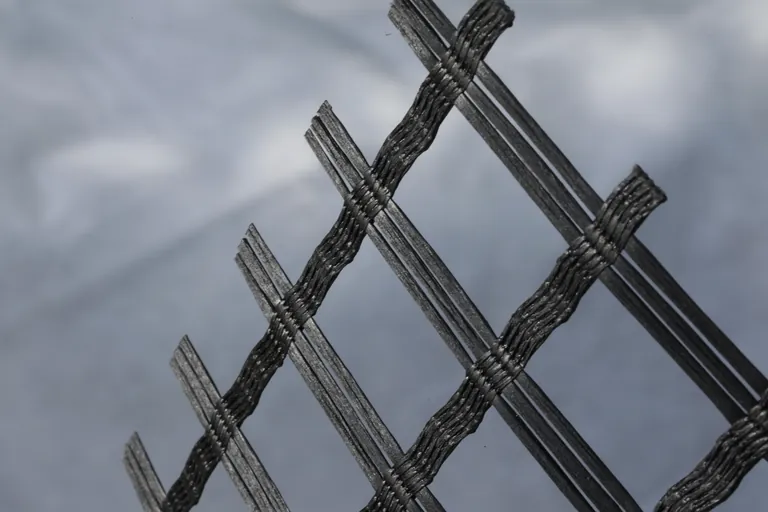
The project consultant recommended the use of TechGrid PET Biaxial Geogrid, grade TGB 200, above the stone columns to improve load distribution and minimize settlement.
TechGrid TGB 200 provides an ultimate tensile strength of 200 kN/m in both principal directions. The geogrid is manufactured using high-tenacity polyester filament yarns with:
Installed above the stone columns, the biaxial geogrid helped reinforce the ground improvement system, distribute tank loads more efficiently, and improve the stability and settlement performance of the foundation platform.
The ground improvement system was completed successfully and has been performing as intended. The project met the satisfaction of both the client and contractor, providing a stable and reliable foundation solution for the DCU feed storage tank.
The expansion includes a new refinery with a crude-processing capacity of 6 million tonnes per annum. This will increase NRL’s total capacity from 3 MMTPA to 9 MMTPA.
The system was used beneath a DCU feed storage tank associated with the refinery expansion project.
The storage tanks were proposed in an area with weak and compressible soil. Since storage tanks impose substantial loads on their foundations, the site required improvement to increase bearing capacity and control settlement.
Ground improvement was required to:
A geogrid layer was incorporated between the stone blanket and the stone columns to improve load transfer, reinforce the improved ground platform, and reduce settlement.
TechGrid TGB 200 was installed above the stone columns and below the stone blanket as part of the ground improvement system.
The geogrid reinforced the stone column-supported foundation platform. It helped distribute tank loads more efficiently, improve confinement, enhance stability, and minimize settlement.
TechGrid TGB 200 has an ultimate tensile strength of 200 kN/m in both principal directions.
The geogrid interacts with the stone blanket and surrounding materials to distribute loads across a broader area. This reduces stress concentration and improves the transfer of tank loads to the stone columns and underlying soil.
By reinforcing the load-transfer platform and improving load distribution, the geogrid helps reduce localized deformation and settlement of the tank foundation system.
Storage tanks require stable and relatively uniform foundations. Excessive or differential settlement can affect tank alignment, foundation integrity, operational performance, and long-term serviceability.
The ground improvement system was completed successfully and has been performing as intended. It provided a stable and reliable foundation solution for the DCU feed storage tank.
Similar geogrid-reinforced ground improvement systems may be considered for storage tanks, industrial yards, warehouses, logistics facilities, heavy equipment platforms, and other structures founded on weak or compressible soils.