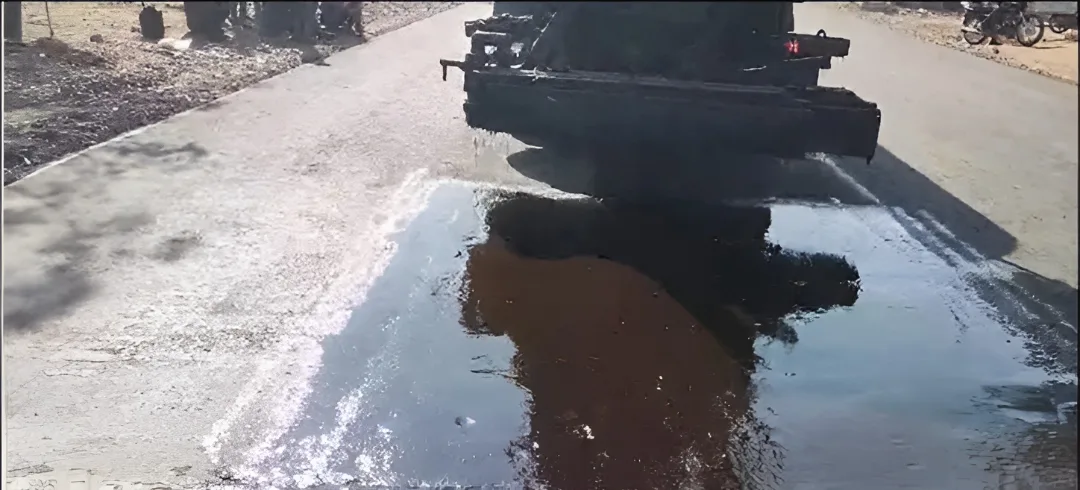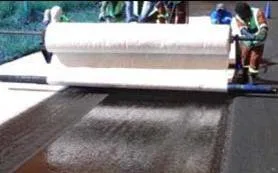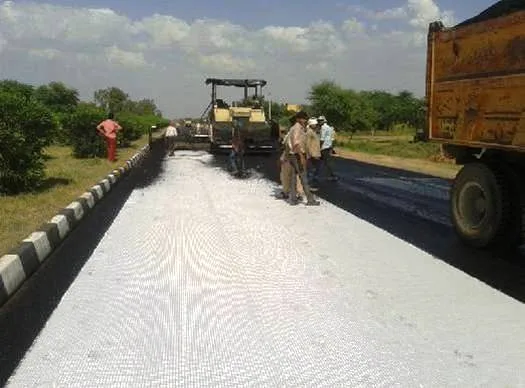
TechGlass AIC is an asphalt interlayer composite made from high-modulus, low-strain glass fiber strands stitched to a polyester or polypropylene nonwoven geotextile. The glass fiber reinforcement provides tensile strength and stiffness, while the nonwoven component contributes bonding, stress relief, and moisture-protection functions within the pavement system.
The composite is designed for use beneath asphalt overlays to help limit reflective cracking from existing pavement layers. The source product information also states that TechGlass AIC can withstand the elevated temperatures encountered during placement of asphalt concrete and modified asphalt concrete mixtures. Product selection and installation should follow the current technical data sheet and project-specific pavement design.
Features
Solutions
Success Stories
Resources
Reflective crack mitigation
Designed to help reduce the propagation of cracks from an existing pavement into a new asphalt overlay.
High-modulus glass fiber reinforcement
The glass fiber strands provide tensile reinforcement with low-strain characteristics, as described in the source product information.
Interlayer stress relief
The composite is intended to help manage stresses caused by traffic loading and temperature-related pavement movement.
Moisture protection
The source describes the nonwoven component as providing waterproofing protection. Confirm the product’s tested water-barrier performance and required system details before describing it as fully waterproof.
Compatibility with asphalt placement temperatures
The source states that the composite can withstand temperatures encountered during placement of asphalt concrete and modified asphalt mixtures. Confirm applicable temperature limits in the product documentation.
Combined composite construction
Glass fiber reinforcement and a nonwoven geotextile are stitched together to provide several pavement-interlayer functions in one product.
Potentially longer pavement performance
By helping manage reflective cracking and moisture ingress, the product may support pavement durability when correctly specified and installed. Actual service-life and cost outcomes depend on the pavement design and field conditions.
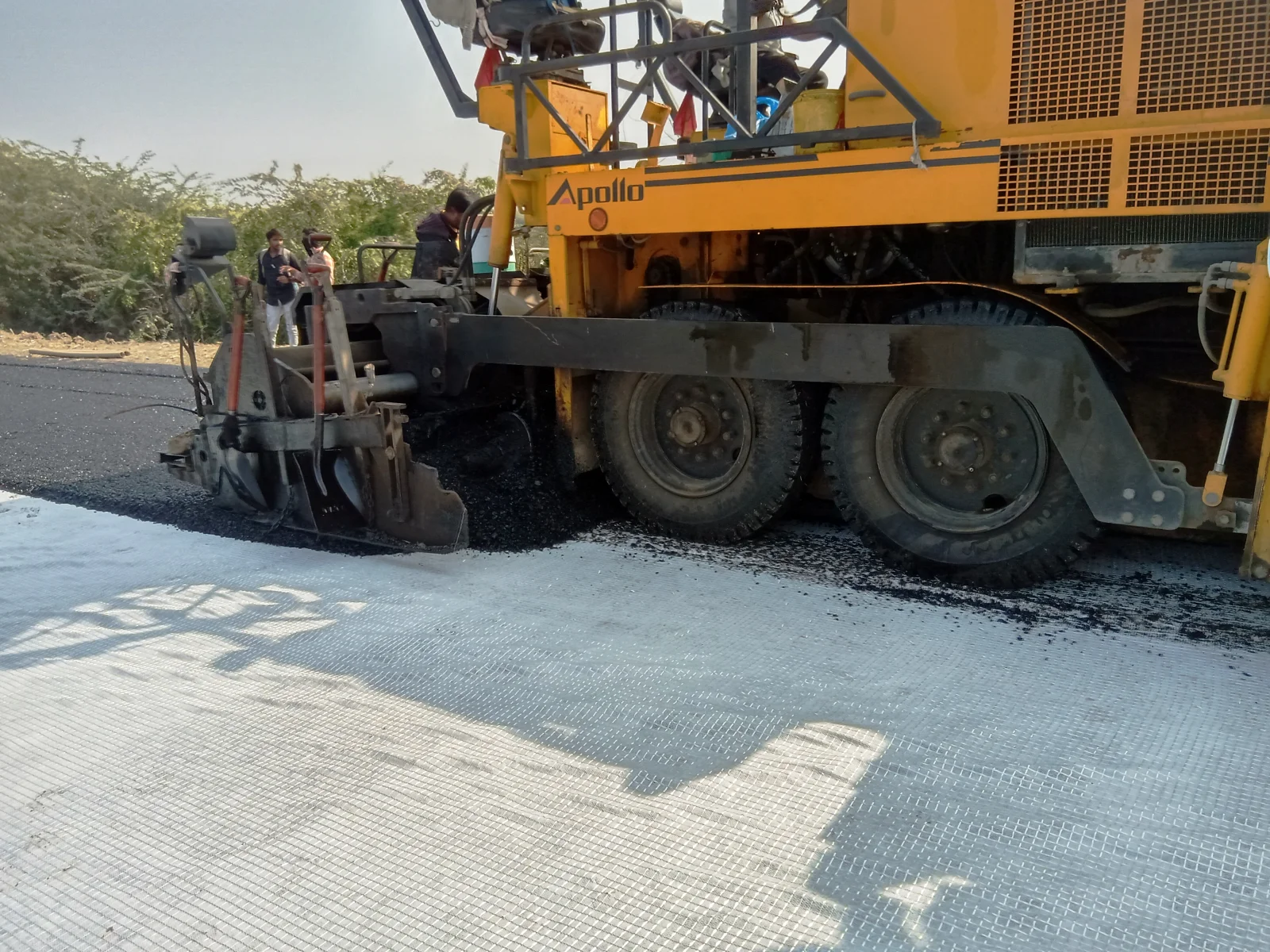
Existing cracks in a pavement can move under traffic and temperature changes. When a new asphalt overlay is placed, those movements can contribute to cracks reappearing at the surface. TechGlass AIC is installed as an interlayer within the pavement system to help mitigate this reflective cracking.
The high-modulus, low-strain glass fiber strands provide reinforcement, while the stitched nonwoven geotextile contributes interlayer bonding, stress-relieving, and moisture-protection functions. The result depends on surface preparation, the condition of the existing pavement, tack coat or bonding requirements, installation procedure, overlay design, and the product’s documented properties.
Advanced asphalt interlayer composite solution for reflective crack mitigation, pavement reinforcement, waterproofing, and long-term roadway performance enhancement.
TechGlass AIC can be considered for rehabilitation projects where an asphalt overlay is placed over an existing pavement and reflective cracking is a concern. Suitability depends on the existing crack pattern, pavement condition, preparation, and the rehabilitation design.
Applications
The glass fiber component provides tensile reinforcement within the interlayer system. TechGlass AIC may be used in designed pavement rehabilitation or strengthening systems where the required product properties and construction details are met.
Applications
The source describes TechGlass AIC as providing waterproofing protection within pavement structures. Before specifying it for moisture exclusion, confirm the product’s tested water-barrier properties, the required bonding materials, and the approved installation system.
Applications
Traffic loads and temperature variations can generate stresses between existing pavement and a new overlay. TechGlass AIC is designed to help manage these interlayer stresses as part of a pavement rehabilitation system.
Applications
 European Conformity (CE)
 ISO 9001
 Geosynthetic Accreditation Institute (GAI-LAP)
 National Accreditation Board for Testing and Calibration Laboratories (NABL)

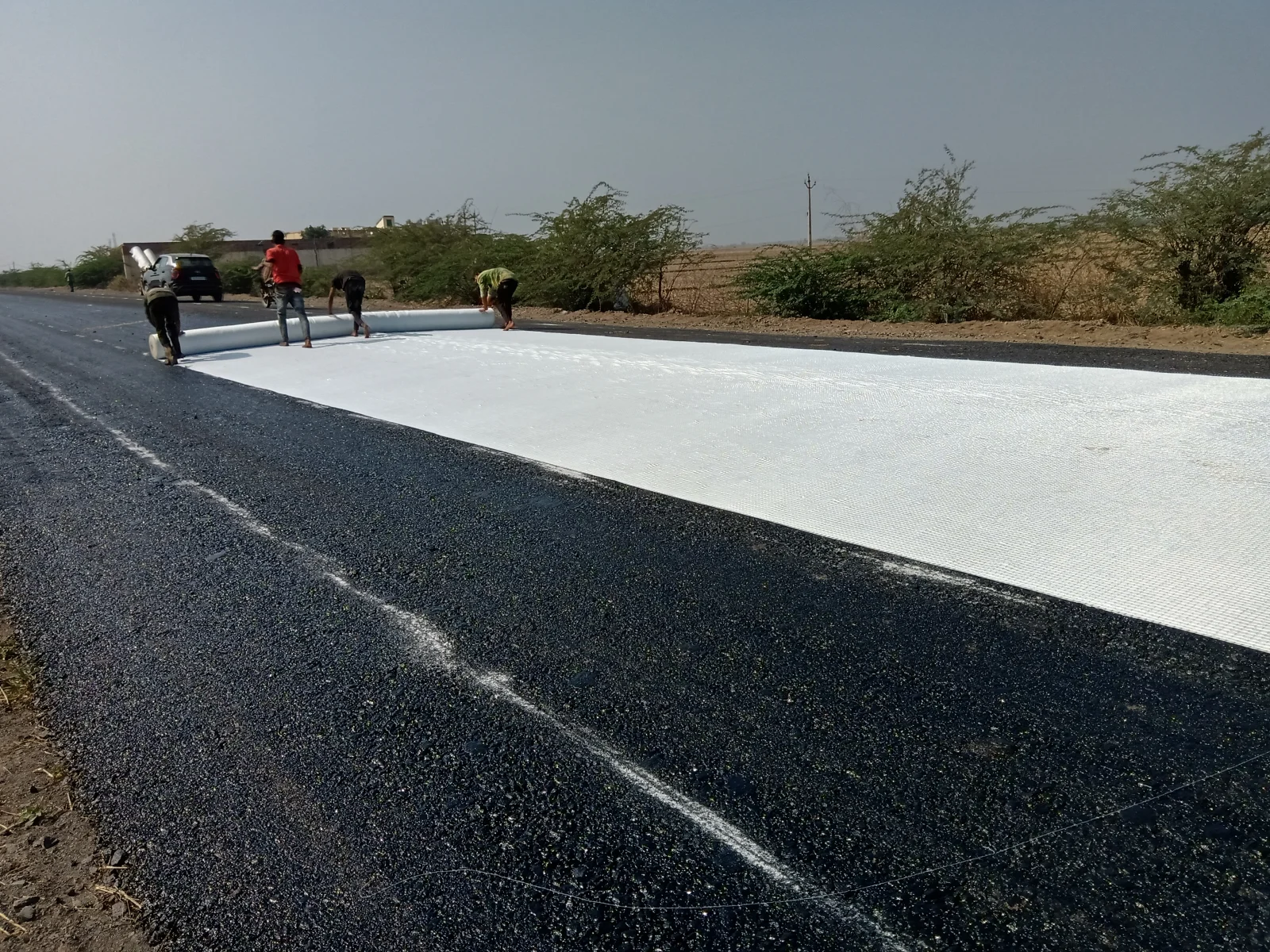
Provide the current installation instructions for TechGlass AIC, including requirements for pavement surface preparation, placement, bonding materials, overlaps, asphalt placement, and construction traffic, where applicable to the approved product system.
Link to current videos showing TechGlass AIC installation and asphalt pavement rehabilitation techniques, where these resources are available and approved for use.
Connect with our engineering team for expert guidance
TechGlass AIC is an asphalt interlayer composite made from high-modulus, low-strain glass fiber strands stitched to a polyester or polypropylene nonwoven geotextile. It is designed to help mitigate reflective cracking and provide reinforcement and interlayer functions in asphalt pavement systems.
The source product information describes high-modulus glass fiber strands stitched to a polyester or polypropylene nonwoven geotextile. Confirm the exact nonwoven material used in the selected grade from the current technical data sheet.
Reflective cracking occurs when cracks or joints in an existing pavement propagate upward through a new overlay over time. Traffic loading and temperature-related movement can contribute to this process.
The glass fiber strands provide tensile reinforcement, while the nonwoven geotextile contributes interlayer bonding and stress-relieving functions. When the product is correctly selected and installed as part of a suitable rehabilitation design, it is intended to help reduce crack propagation into the new overlay.
Yes. Asphalt overlays, road rehabilitation, and highway resurfacing are listed applications. The existing pavement condition, preparation requirements, bonding materials, installation procedure, and overlay design should be checked against the approved product instructions and project specifications.
Airport and industrial pavements are identified as applications in the source material. The product should be considered only where the pavement design and project specifications support its use and the documented product properties meet the project requirements.
The source describes the composite as providing waterproofing protection and helping prevent moisture ingress. Confirm the product’s tested water-barrier performance and installation details before relying on it as a waterproof layer, particularly in critical applications such as bridge decks.
The source states that TechGlass AIC can withstand temperatures encountered during placement of asphalt concrete and modified asphalt concrete mixtures. Check the product’s technical documentation for applicable temperature limits and installation instructions.
The source describes the glass fiber strands as high-modulus and low-strain. They provide tensile reinforcement within the composite and are intended to improve the interlayer’s ability to manage stresses within the pavement system.
According to the source, the nonwoven component contributes waterproofing, stress-relieving, and bonding functions. The same document also describes it as part of the composite’s moisture-protection system. Verify the grade-specific function and performance in the technical data sheet.
No product should be described as eliminating all cracking. TechGlass AIC is designed to help mitigate reflective cracking, but outcomes depend on the condition of the existing pavement, crack movement, surface preparation, installation, overlay design, traffic, and environmental conditions.
Review the existing pavement condition, crack type and extent, planned overlay, traffic and temperature conditions, surface preparation, bonding requirements, installation procedure, and applicable project specifications. Confirm that the product’s technical data supports the intended application.
Refer to the current TechGlass AIC technical data sheet, approved product brochure, installation manual, and relevant installation videos provided by Techfab USA. Confirm that the documentation matches the product being considered.
The supplied product information lists strengthening and reconstruction of NH-752 in Rajasthan, repair and rehabilitation of Provincial Road P/9 in South Africa, and four-lane highway improvement on NH-11 in Rajasthan. These should be presented with their actual locations and verified project descriptions.