Home / Success Stories / Repair and Rehabilitation of Provincial Road P/9, R103 Alberton – Pietermaritzberg via Heidelberg & Harrismith, South Africa
South Africa | DEPARTMENT OF TRANSPORTATION (DOT), South Arica
The N3 National Highway runs through the south-western tip of Mpumalanga towards Heidelberg. Wherever the N3 has been realigned, the original alignment has been reclassified as R103. This regional road connects Alberton with Pietermaritzburg via Heidelberg and Harrismith and carries significant traffic, including passenger vehicles using it as a shorter bypass, often with aggressive driving patterns.
Rehabilitation work on the flexible pavement was undertaken near Colenso, located on the southern bank of the Tugela River, to address severe and rapid pavement deterioration.
The R103 corridor experiences:
Originally not designed for such varying Equivalent Axle Load (EASL) conditions, the road deteriorated quickly, exhibiting extensive potholes, patching, and surface failures. Its single-carriageway configuration with limited passing zones further compounded operational and maintenance challenges.
To strengthen the existing flexible pavement and extend its service life, a geocomposite interlayer was proposed to provide both in-plane drainage and tensile reinforcement.
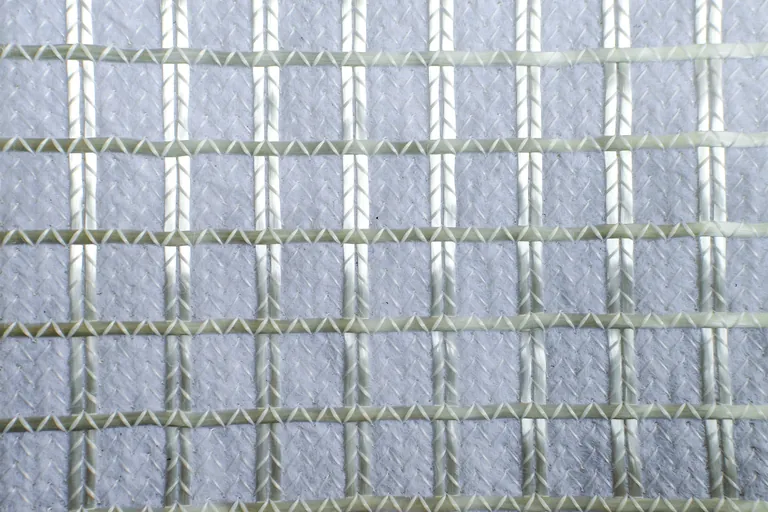
TechGlass AIC (Asphalt Interlayer Composite) was installed as an interlayer beneath a 50 mm Bituminous Concrete (BC) resurfacing. TechGlass AIC is a high-performance geocomposite comprising:
This combination helps control reflective cracking, improve fatigue resistance, manage moisture within the pavement structure, and enhance overall overlay performance under heavy, dynamic traffic.
Project Outcome & Performance
The rehabilitation using TechGlass AIC aimed to:
Extend the service life of the resurfaced flexible pavement under demanding traffic and climatic conditions
It is a repair and rehabilitation project on Provincial Road P/9, R103, connecting Alberton with Pietermaritzburg via Heidelberg and Harrismith in South Africa. The work focused on a deteriorated flexible pavement section near Colenso (southern bank of the Tugela River) and was executed for the Department of Transportation (DOT), South Africa.
The R103 corridor faces a combination of severe stresses:
As a result, the road developed extensive potholes, patching, and surface failures soon after construction.
A geocomposite interlayer system, TechGlass AIC (Asphalt Interlayer Composite), was installed beneath a 50 mm Bituminous Concrete (BC) resurfacing. The goal was to strengthen the flexible pavement while improving drainage and tensile capacity within the overlay system.
TechGlass AIC is a high-performance asphalt interlayer geocomposite made from:
This structure combines:
TechGlass AIC contributes to:
A conventional thin overlay alone would likely have failed quickly due to:
TechGlass AIC addresses these issues by adding tensile reinforcement and drainage/filtration functions within the overlay system, improving longevity without major reconstruction.
TechGlass AIC was installed as an interlayer between:
This positioning allows it to intercept cracks and manage moisture at the critical interface between old and new layers.
The rehabilitation aimed to:
TechGlass AIC (Asphalt Interlayer Composite) – a glass-fiber-reinforced geocomposite with polyester nonwoven backing, designed for asphalt overlay reinforcement, reflective crack control, and improved moisture management in flexible pavements.