Home / Solutions / Ground Improvement / Shallow Ground Improvement
Shallow ground improvement techniques enhance the engineering properties of near-surface soils, typically within depths of approximately 1–3 metres. They are suitable when weak soil layers are limited to the upper portion of the ground profile.
Solutions such as geocell confinement and geogrid reinforcement improve Safe Bearing Capacity, increase load distribution, and control deformation. They help minimize differential settlement and create stable foundation platforms for pavements, embankments, working platforms, and lightly loaded structures.
Overview
Success Stories
Products
Resources
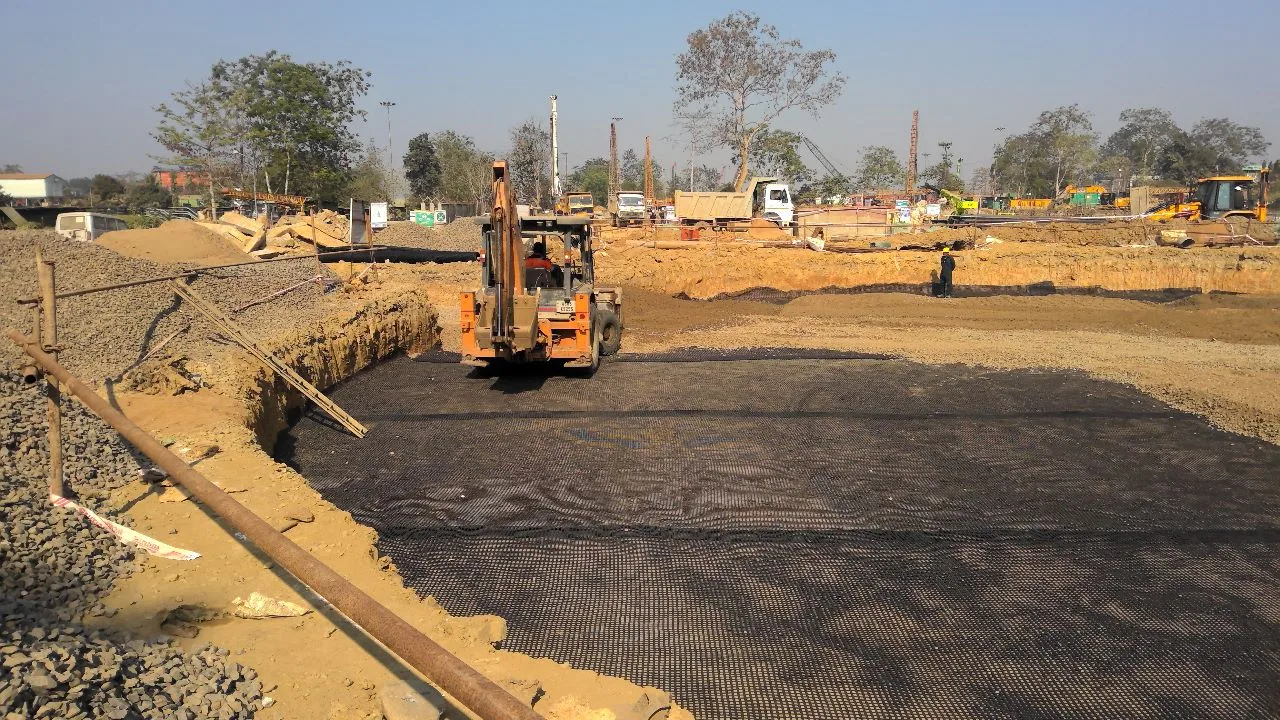
Shallow ground improvement involves treating and reinforcing weak soil within the upper ground layers to create a stable and dependable foundation platform. These systems improve soil confinement, stiffness, load-bearing behavior, and resistance to deformation.
Unlike deep ground improvement methods, which treat soil at considerable depths, shallow techniques focus on strengthening the upper strata where applied stresses are concentrated. This approach can support faster construction, reduce material requirements, and lower overall project costs.
Shallow ground improvement is particularly effective for sites with:
TechFab provides a range of geosynthetic solutions for shallow ground improvement, including:
These systems may be used individually or in combination, depending on the soil profile, loading conditions, drainage requirements, and project objectives.
With extensive geotechnical expertise, TechFab supports projects through design optimization, product selection, installation guidance, construction assistance, and technical coordination. This approach helps deliver durable, economical, and site-specific ground improvement solutions.
Available Systems
TechCell Geocell System for Ground Improvement
TechCell is a lightweight, high-strength, three-dimensional cellular confinement system manufactured from HDPE. It confines weak soil or infill material, improves load-bearing capacity, distributes loads effectively, and controls surface deformation.
Typical applications: Roadways, railway tracks, landfill projects, working platforms, access roads, and shallow ground stabilization.
TechFab Biaxial Geogrid System for Basal Reinforcement
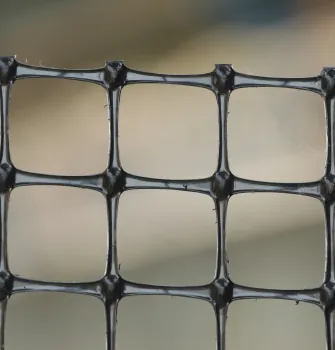
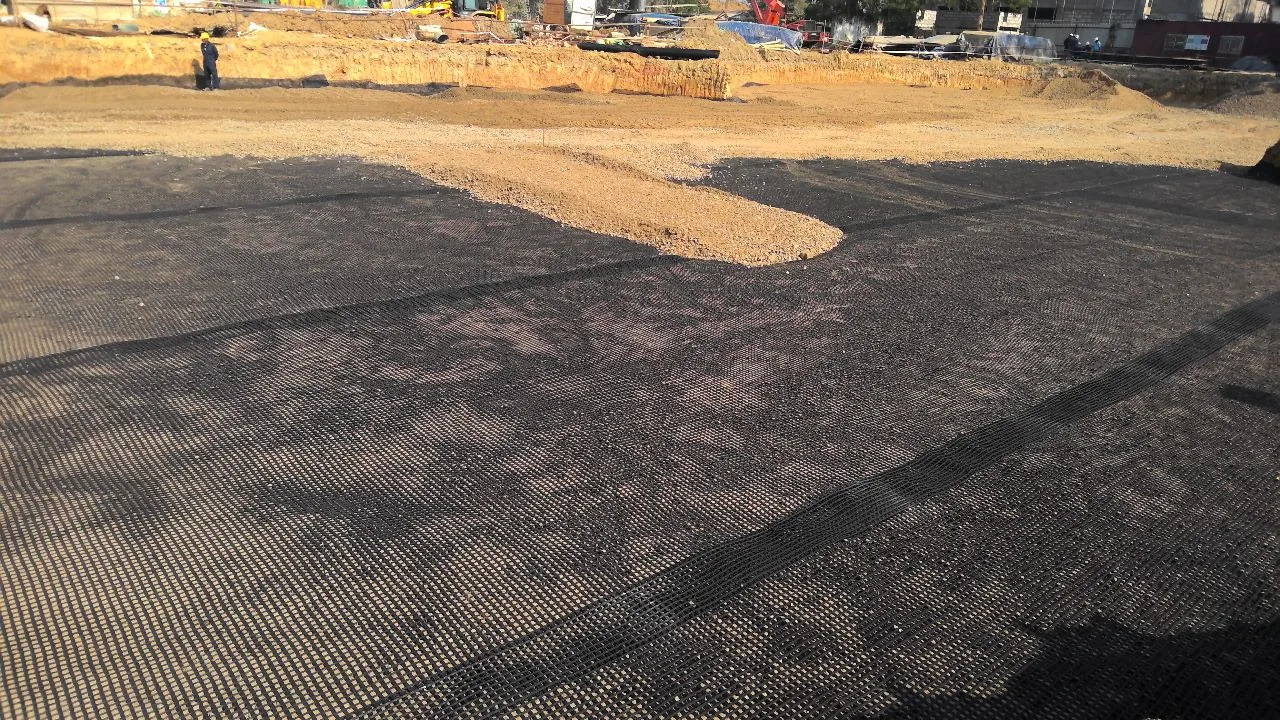
TechFab Biaxial Geogrid is an integrally formed polypropylene geogrid that provides tensile reinforcement in two directions. It enhances soil interlock and confinement, improves load distribution, and supports subgrade stabilization.
Typical applications: Subgrade stabilization, basal reinforcement, working platforms, load-transfer platforms, embankments, and pavement foundations.
TechFab Geotextile for Ground Improvement
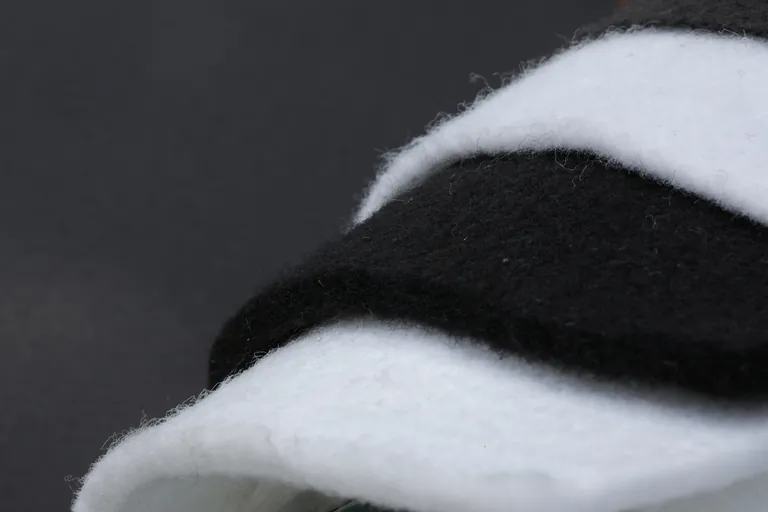
TechFab woven and nonwoven geotextiles are designed to provide separation, filtration, reinforcement, and drainage. They offer high tensile strength, controlled permeability, and durability in demanding soil and environmental conditions.
Typical applications: Subgrade stabilization, basal reinforcement, separation layers, drainage, coastal protection, erosion control, and shallow ground improvement.
Shallow ground improvement is the treatment and reinforcement of weak soil near the ground surface, typically within depths of approximately 1–3 metres. It improves soil confinement, stiffness, bearing capacity, load distribution, and resistance to deformation.
It is suitable when weak soil is limited to the upper portion of the ground profile and deeper soil can support the required loads. It is commonly used for pavements, embankments, working platforms, access roads, and lightly loaded structures.
Key benefits include:
Shallow improvement may be useful for:
Suitability must be confirmed through site investigation and project-specific design.
Shallow ground improvement generally addresses soil within approximately 1–3 metres of the surface. The actual treatment depth depends on soil conditions, design loads, settlement limits, drainage, and the selected system.
Geocells provide three-dimensional confinement, geogrids provide tensile reinforcement and soil interlock, and geotextiles provide separation and reinforcement. Together, these functions improve load transfer and enable the ground to support applied loads more effectively.
The systems confine soil and aggregate, distribute loads over a wider area, and limit lateral movement. This helps reduce surface deformation and improves stability under traffic or structural loads.
Improved stiffness, confinement, and load distribution help reduce localized deformation and uneven movement. This can minimize total and differential settlement in suitable ground conditions.
Shallow improvement strengthens near-surface soils, typically within about 1–3 metres. Deep ground improvement treats weak soil layers at greater depths and is used when shallow methods cannot address the full thickness of weak or compressible ground.
It can reduce excavation, soil replacement, imported fill, and the need for deep foundations. The simpler construction process may also shorten project schedules and enable earlier access for equipment.
Typical applications include:
Yes. They can improve subgrade support, reduce deformation, and distribute traffic loads beneath roads, airport pavements, parking areas, access roads, and industrial surfaces.
Yes. Geogrids and geotextiles can provide basal reinforcement beneath embankments, while geocells can help improve load distribution and control deformation in near-surface soil.
Yes. It can create stable working platforms, access roads, parking areas, and temporary construction surfaces for heavy equipment. The system must be designed for the expected loads and ground conditions.
TechFab can support projects through design optimization, product selection, system configuration, installation guidance, construction assistance, and project-specific technical coordination.