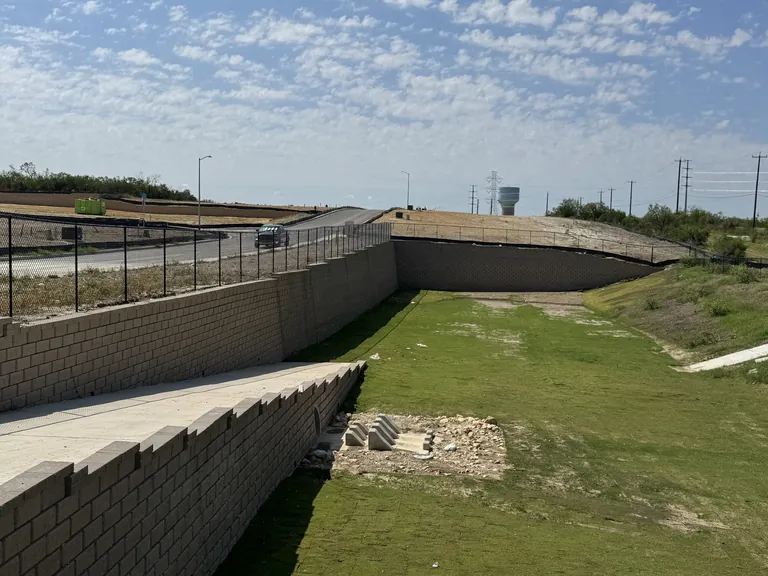
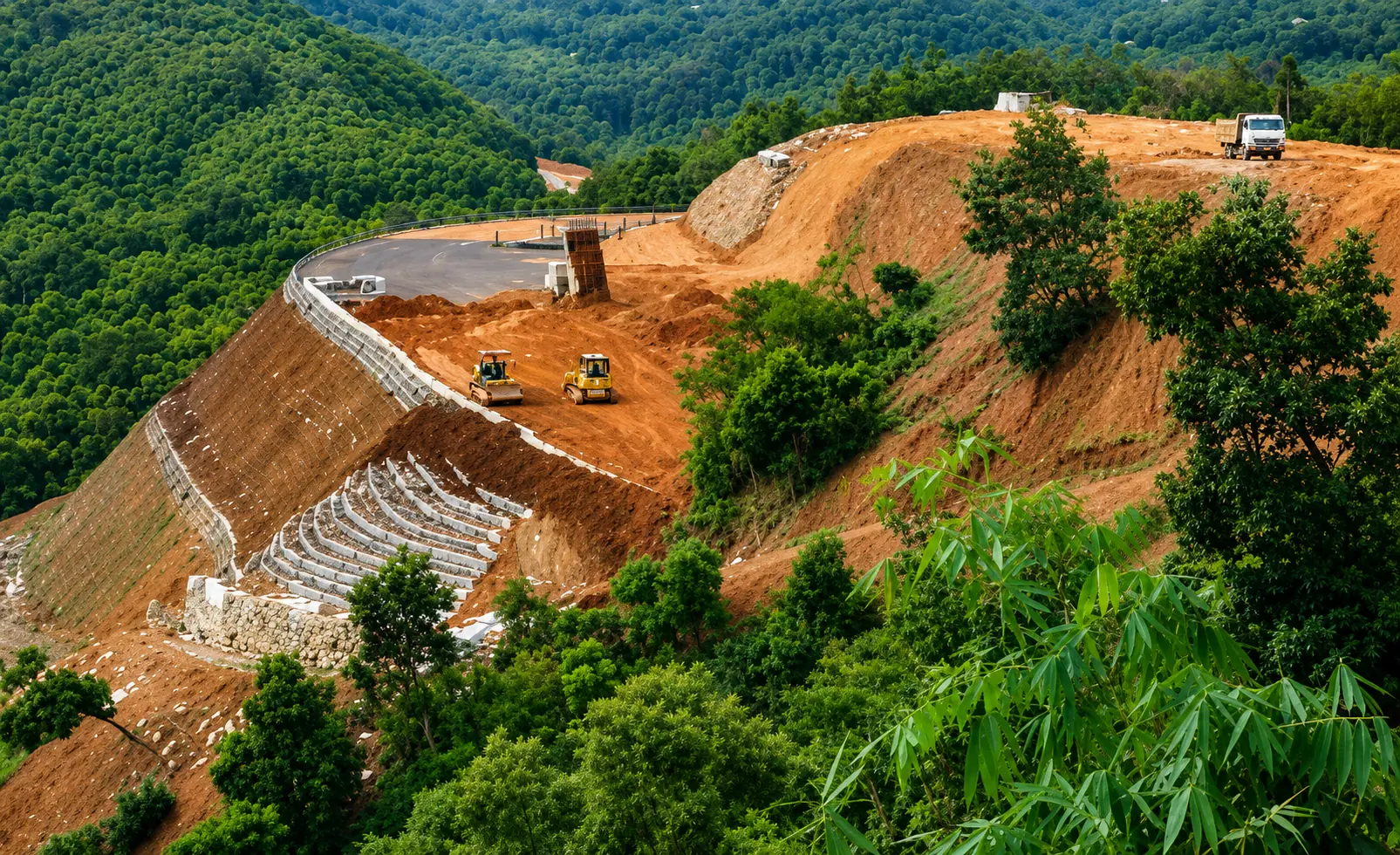
Retaining structures are used where natural ground conditions cannot safely retain soil because of steep slopes, changes in elevation, erosion risks, or limited space. By combining high-performance geosynthetics with advanced geotechnical engineering, these systems improve ground stability, resist lateral earth pressures, control erosion, and maximize land utilization.
TechFab provides Reinforced Soil Wall and Reinforced Soil Slope systems that deliver durable, economical, and environmentally compatible solutions for a wide range of infrastructure and geotechnical applications.
Overview
Available Systems
Success Stories
Products
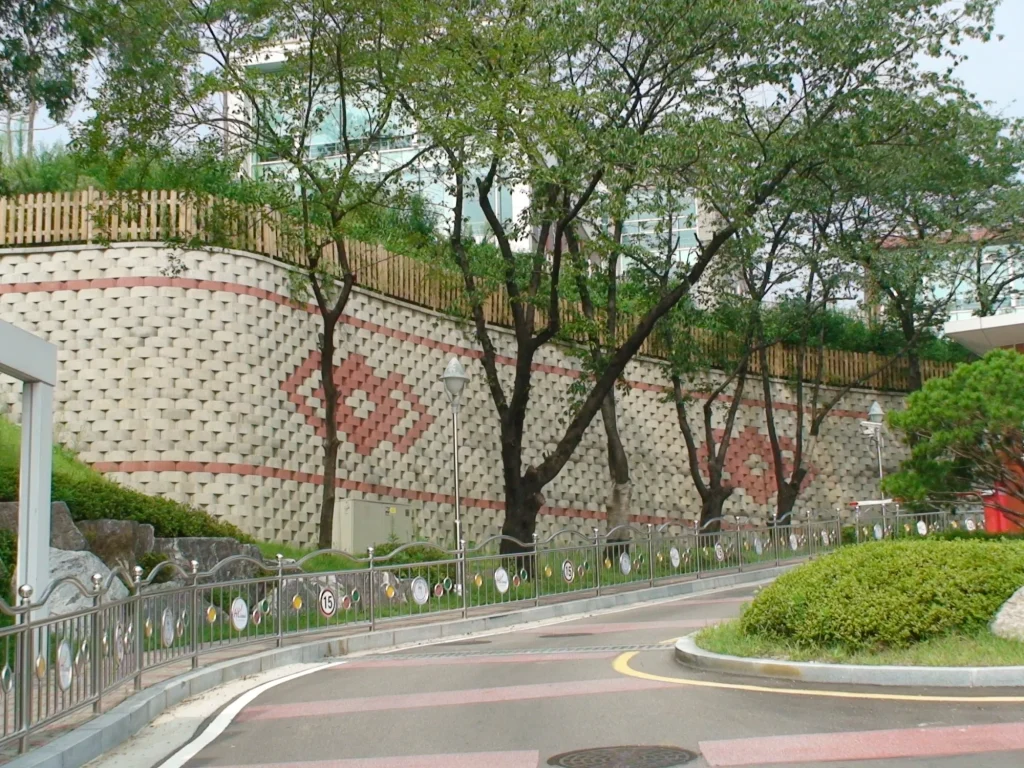
Retaining structures are engineered systems designed to stabilize soil where natural ground conditions cannot safely retain earth due to elevation differences, steep slopes, erosion risks, or space limitations. By integrating advanced geotechnical design, high-performance geosynthetics, and engineered facing systems, these solutions improve stability, resist lateral earth pressures, control erosion, and optimize land use. They support safe and sustainable infrastructure development across a wide range of site conditions.
Compared with conventional reinforced concrete retaining solutions, reinforced soil systems combine high-strength geosynthetic reinforcement with carefully selected engineered backfill to create a stable and efficient earth-retention structure. Their flexible, modular construction enables faster installation, reduces foundation requirements, improves tolerance to differential settlement, and enhances performance in seismic conditions.
Reinforced Soil Walls and Reinforced Soil Slopes are widely used where reliable and economical earth-retention solutions are required under challenging site conditions. Typical applications include highways, railways, bridge approaches, hill roads, ports, mining developments, industrial facilities, urban infrastructure, and riverbank protection works.
These systems provide dependable stability, efficient land utilization, erosion control, and long-term performance while adapting to different terrain profiles, loading conditions, and environmental requirements.
TechFab offers a versatile portfolio of reinforced soil solutions supported by high-performance geosynthetics, engineered facing systems, and gabion technologies. The systems can be used independently or in combination to address specific site conditions, earth-retention requirements, and project constraints. Each solution is engineered to provide stability, durability, constructability, and cost efficiency.
Backed by extensive expertise in geosynthetics and reinforced soil technology, TechFab provides support throughout the project lifecycle. This includes preliminary assessments, detailed engineering design, construction guidance, site assistance, and performance reviews. This integrated approach helps ensure safe, durable, constructible, and cost-effective solutions tailored to each project.
01
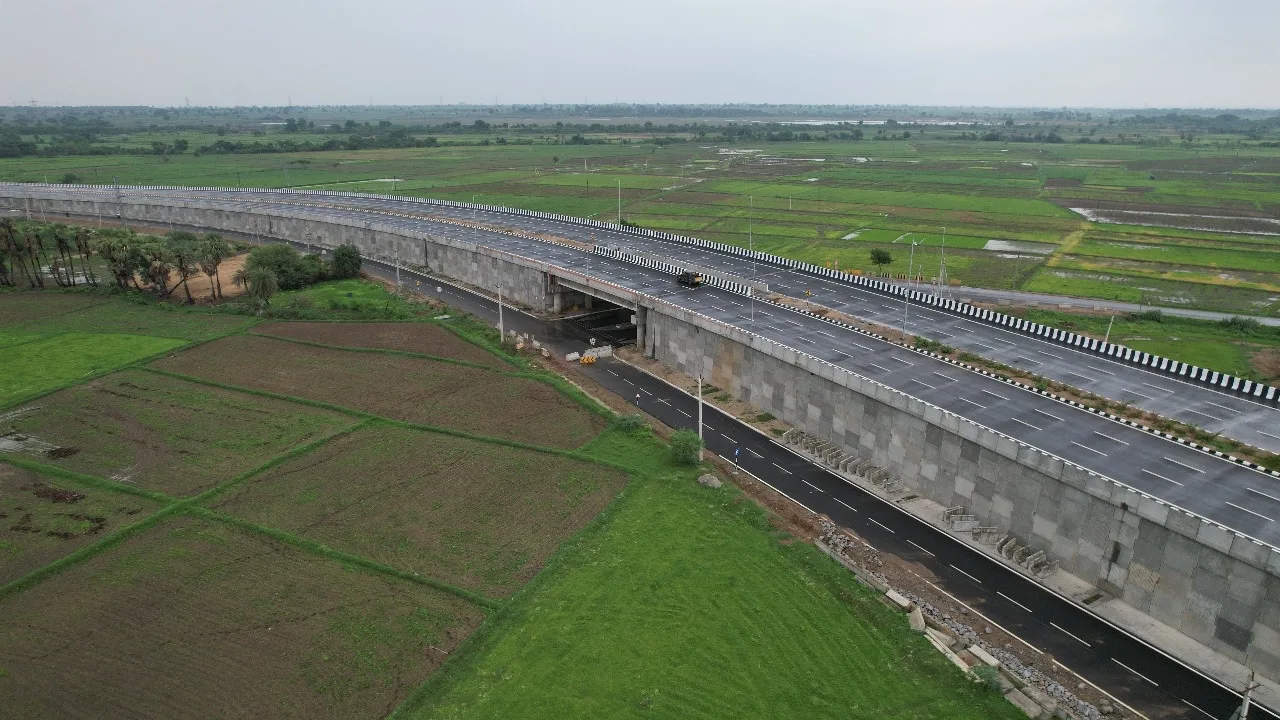
TechFab’s Reinforced Soil Wall and Mechanically Stabilized Earth systems combine selected granular backfill with high-strength geosynthetic or metallic reinforcement and durable facing systems. The interaction between the soil and reinforcement forms a stable composite mass capable of resisting lateral earth pressures, differential settlement, and external loading.
02
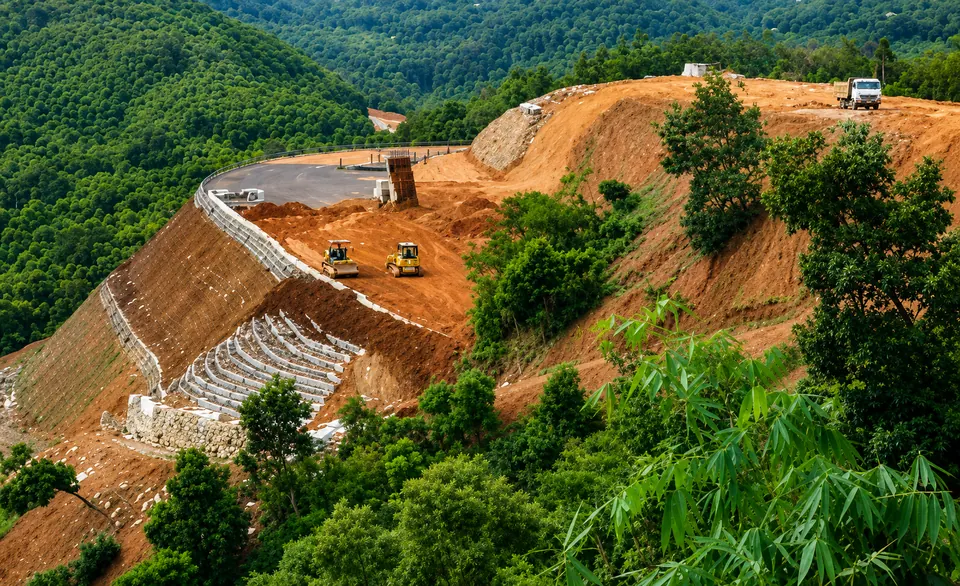
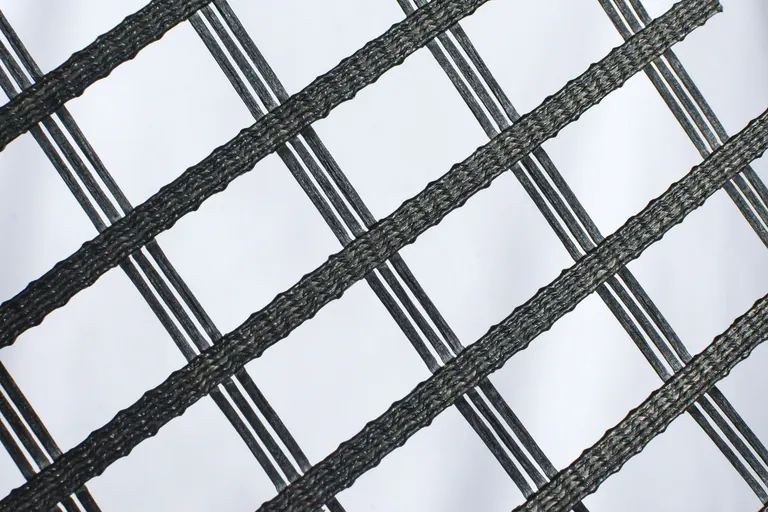
Reinforced Soil Slopes use high-strength geosynthetic reinforcement to improve the shear strength and stability of soil. These systems enable slopes to be constructed at steeper angles than natural ground conditions would typically allow, helping maximize land use while providing reliable erosion and deformation control.
03
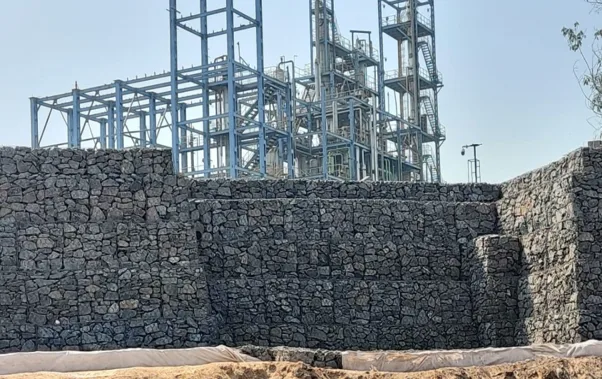
Robust earth-retaining structures that utilise their self-weight to counteract lateral soil pressures and maintain overall stability, relying on mass and base friction for inherent reliability without reinforcement elements.
TechFab Metal Gabions Gravity Wall
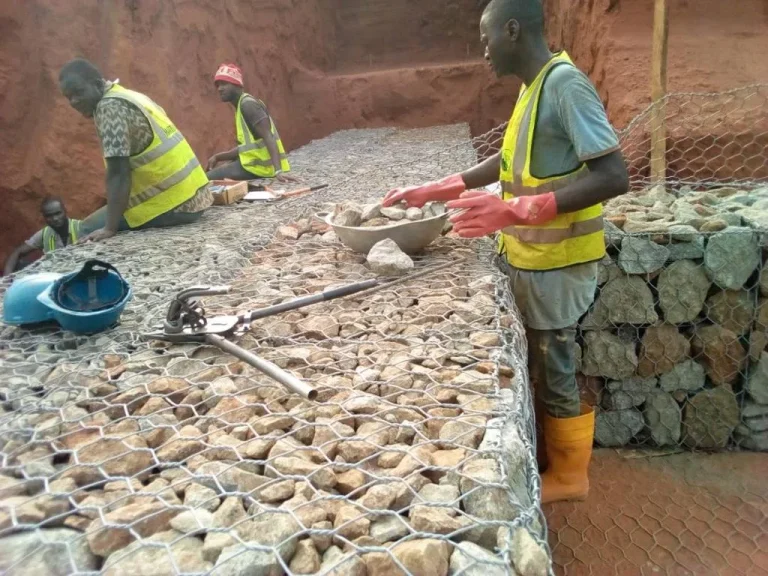
High-quality double-twisted, mechanically woven steel wire mesh baskets filled with stones arranged in layers to form a stable, permeable retaining structure.
Function
Self-weight gravity retention with permeable drainage
Typical Use
Road embankments, railway corridors, hydraulic works, industrial projects, mining sector
Welded Wire Mesh Fascia Reinforced Soil Slope System
The TechFab Welded Wire Mesh Fascia Reinforced Soil Slope System combines welded-wire mesh facing units with geogrid reinforcement, such as TechGrid or TechLink. The facing units are filled with appropriately sized and graded stones to provide structural stability, design flexibility, and effective drainage. Typical applications: Stabilization of soil slopes and embankments along highways, railways, bridge approaches, hill roads, and other infrastructure projects.
Function
Wire mesh face with geogrid soil reinforcement
Typical Use
Highways, railways, bridge approaches, hill roads
TechGreen DT Mesh Fascia Reinforced Soil Slope System
The TechGreen DT Mesh Fascia Reinforced Soil Slope System consists of TechGreen DT Mesh facing units integrated with TechGrid or TechLink geogrid reinforcement. The facing is filled with vegetative soil to provide stability, flexibility, efficient drainage, environmental compatibility, and an attractive green appearance. Typical applications: Highway and railway embankments, hill roads, bridge approaches, slope stabilization, and infrastructure projects requiring vegetation-friendly facings and effective drainage.
Function
Vegetated mesh face with geogrid reinforcement
Typical Use
Highway/railway embankments, hill roads, slope stabilisation needing green aesthetics
Discrete Panel Fascia Reinforced Soil Wall System
The Discrete Panel Fascia Reinforced Soil Wall System consists of precast concrete facing panels connected using Techcore connectors and mechanically integrated with high-strength TechStrap or TechGrid reinforcement layers. These layers are placed within compacted engineered backfill to create a stable and durable reinforced soil structure. Typical applications: Highway retaining walls, bridge approaches, railway embankments, flyovers, industrial developments, ports, and other infrastructure projects.
Function
Precast panel face with mechanically connected reinforcement
Typical Use
Highway retaining walls, bridge approaches, railway embankments, flyovers
Retaining structures are engineered systems designed to hold back soil and stabilize ground where natural conditions cannot safely retain earth. They are commonly used in areas with steep slopes, elevation changes, erosion risks, or limited space.
Retaining structures help prevent soil movement, slope failure, erosion, and loss of usable land. They also enable construction in challenging locations by creating stable slopes, embankments, and near-vertical faces.
Reinforced soil structures combine engineered backfill with high-strength geosynthetic or metallic reinforcement. The interaction between the soil and reinforcement creates a stable composite mass capable of resisting lateral earth pressures, external loads, and ground movement.
A Reinforced Soil Wall generally has a near-vertical or steeply inclined face and is used where space is limited. A Reinforced Soil Slope uses reinforcement to stabilize slopes at angles steeper than those possible with untreated soil, while typically retaining a sloped face.
An MSE, or Mechanically Stabilized Earth, wall is a reinforced soil retaining system. It consists of engineered backfill, high-strength reinforcement, and a facing system. TechFab’s MSE wall solutions use geosynthetic or metallic reinforcement to improve stability and resist lateral earth pressures.
Reinforced soil systems offer several advantages, including:
Yes. Reinforced soil systems are flexible and can accommodate ground movement and differential settlement with less structural distress than many rigid retaining systems, provided they are appropriately designed and constructed.
Yes. These systems can be adapted to hilly areas, steep slopes, restricted sites, weak foundation conditions, and other challenging ground environments. They are also suitable for applications involving seismic activity, erosion risks, and significant settlement.
TechFab retaining systems can be configured with several facing options, including:
The appropriate facing depends on the structural, drainage, environmental, and architectural requirements of the project.
Many reinforced soil systems can provide environmentally compatible solutions by reducing the need for rigid concrete construction, optimizing material use, and supporting vegetation. Green facings and vegetation-supporting systems can also help the structure blend with its surroundings.
Reinforced soil systems allow slopes to be constructed at steeper angles and can support near-vertical retaining walls. This helps maximize usable space for roads, railways, developments, industrial facilities, and other projects where land availability is limited.
This system combines welded-wire mesh facing units with geogrid reinforcement, such as TechGrid or TechLink. The facing units are filled with appropriately sized stones to provide structural stability, design flexibility, and effective drainage.
It is commonly used for soil slopes and embankments along highways, railways, bridge approaches, hill roads, and other infrastructure projects.
The TechGreen DT Mesh system combines TechGreen DT Mesh facing units with TechGrid or TechLink geogrid reinforcement. The facing is filled with vegetative soil to provide structural stability, drainage, environmental compatibility, and a green appearance.
It is suitable for highway and railway embankments, hill roads, bridge approaches, slope stabilization, and projects requiring vegetation-friendly facings.
The TechCell Geocell Fascia system uses three-dimensional cellular confinement panels at the exposed slope face, integrated with high-strength TechGrid reinforcement within compacted engineered backfill.
The geocell facing confines the infill material, improves face stability, supports vegetation, and helps control surface erosion. It can also accommodate differential settlement and deformation.
This system consists of precast concrete facing panels connected with Techcore connectors and integrated with TechStrap or TechGrid reinforcement layers. The reinforcement is placed within compacted engineered backfill to create a stable and durable reinforced soil wall.
Typical applications include highway retaining walls, bridge approaches, railway embankments, flyovers, industrial developments, and port infrastructure.
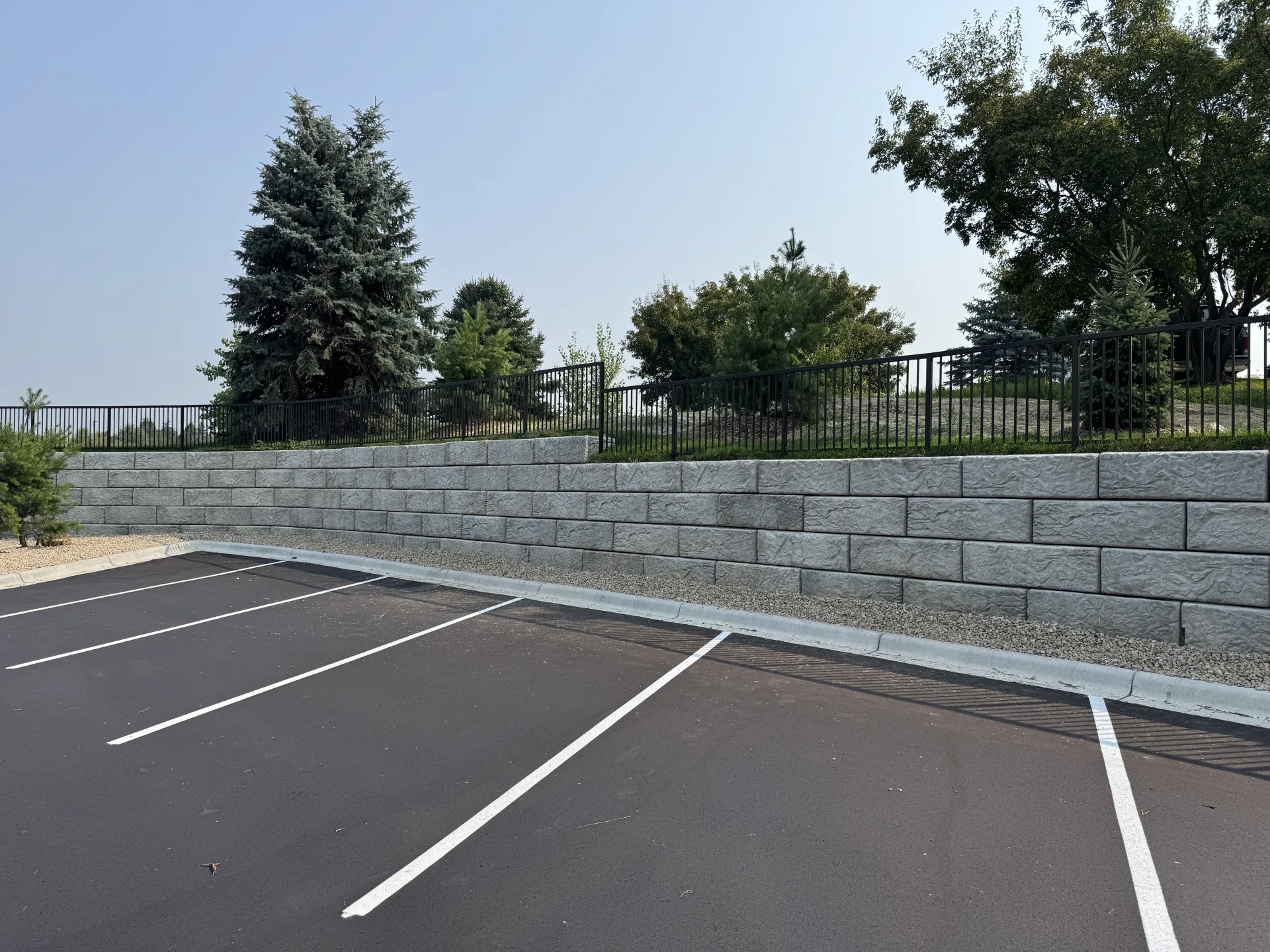
The Segmental Block Fascia system combines modular concrete blocks, engineered backfill, and high-strength TechGrid reinforcement. Together, these components form a stable, durable, and efficient earth-retention structure.
It is suitable for highway retaining walls, bridge approaches, railway embankments, flyovers, industrial developments, ports, and related infrastructure projects.
The TechFab Gabion Fascia system uses double-twisted, mechanically woven steel wire mesh baskets filled with graded stones. These gabions are combined with TechGrid, TechLink, or TechStrap reinforcement layers to form a stable, flexible, and permeable retaining structure.
The system is suitable for road embankments, railway corridors, hydraulic works, mining projects, river training, erosion protection, hilly terrain, and areas prone to settlement or seismic activity.
A Wrap-Around Reinforced Soil Wall System uses high-strength TechGrid reinforcement layers wrapped around the wall face, typically in combination with geobags. This creates a flexible and economical retaining structure that provides soil confinement and improved stability.
It is particularly suitable for temporary retaining works, slope stabilization, road infrastructure, embankment support, industrial projects, and urban development.
This system combines welded wire mesh facing units with TechGrid or TechStrap reinforcement layers. It provides structural stability, flexibility, and effective drainage.
Typical applications include highways, railways, steep slope stabilization, high retaining walls, industrial developments, mining projects, and other earth-retention works.
The TechCell Geocell Fascia Reinforced Soil Wall System incorporates three-dimensional geocell panels at the exposed wall face and high-strength TechGrid reinforcement within compacted engineered backfill.
It provides infill confinement, face stability, vegetation support, erosion control, and flexibility to accommodate settlement and deformation. It is suitable for green retaining walls, temporary works, soil retention, and other flexible earth-retention applications.
TechFab retaining systems are used in a wide range of sectors and applications, including:
Yes. Flexible reinforced soil and gabion systems can be suitable for high-seismic zones because they can accommodate ground movement and deformation more effectively than many rigid structures. The system must be designed by qualified professionals based on site-specific seismic, geotechnical, and loading conditions.
Depending on the system, TechFab solutions may use:
TechFab provides technical assistance throughout the project lifecycle. Support may include preliminary assessments, system selection, engineering design, construction drawings, approval support, construction methodology recommendations, site assistance, and performance reviews.
System selection depends on several factors, including:
A project-specific geotechnical and structural assessment should be completed before selecting the final system.
Reinforced soil systems are designed for long-term performance with relatively low maintenance requirements. However, periodic inspection of the facing, drainage provisions, vegetation, surface erosion, and surrounding ground conditions is recommended to maintain performance throughout the design life.
Durability is supported by the use of high-performance reinforcement, suitable engineered backfill, appropriate drainage, durable facing materials, and project-specific design. The system is also designed to withstand lateral earth pressures, environmental exposure, ground movement, and external loading.
Yes. Depending on the system and design requirements, TechFab retaining solutions can be used for both temporary and permanent applications. Wrap-around, geocell, welded mesh, gabion, and other reinforced soil systems can be selected based on project duration, loading, site conditions, and required service life.
The appropriate solution should be selected after reviewing the project’s geotechnical conditions, geometry, loading, drainage, environmental requirements, construction constraints, and design life. TechFab’s technical team can assist with system evaluation, engineering design, construction planning, and site support.