
Sustainable Replacement of a Failed Stone Masonry Retaining Wall with Gabion Retaining Structures at the Factory Premises of Greenland Particle Boards Private Limited, Perumbavoor, Ernakulam, Kerala

Ernakulam, Kerala, India | Greenland Particle Boards PVT LTD.

Overview

Greenland Particle Boards Private Limited, a leading manufacturer of wood-based particle boards in India, is based in Perumbavoor, Ernakulam District, Kerala. During the development of a new building within the factory premises, a critical failure occurred in the existing stone masonry retaining wall, which originally supported the surrounding terrain.

The wall, with heights ranging from 6 to 7 meters and a total length of approximately 58 meters, collapsed over a 40–45 meter stretch due to a sudden surge in loading. The failure was triggered by excessive pressure from:

  • Heavy construction machinery
  • Large stockpiles of building materials
  • Increased workforce activity

The proximity of the superstructure (just 11 meters away) significantly heightened the risk of further structural compromise, making an immediate, effective, and sustainable solution imperative.

Challenge

The collapse of the stone masonry retaining wall posed a direct threat to:

  • The foundation of the adjacent building, potentially leading to superstructure failure
  • Ongoing and future construction activities within the factory premises
  • Operational continuity of the manufacturing facility

Key requirements for the replacement solution included:

  • Rapid execution to minimize disruption to factory operations
  • Cost-effectiveness without compromising structural integrity
  • Long-term resilience against future load surges and environmental factors
  • Enhanced drainage to prevent hydrostatic pressure buildup
  • Low maintenance and adaptability to varying ground conditions

Solution

After urgent evaluation, TechFab proposed a Gabion Gravity Retaining Wall as a sustainable and economical replacement for the failed stone masonry structure.

Design specifications:

  • Wall heights: 7 m (6 m above ground level + 1 m embedment) and 8 m (7 m AGL + 1 m embedment)
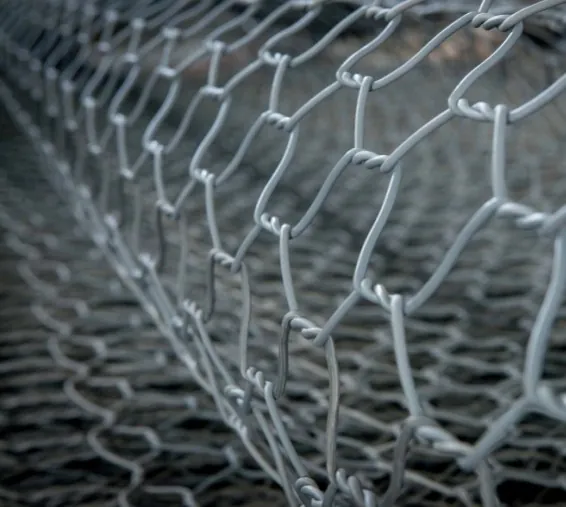
  • Construction: Woven wire mesh gabion baskets filled with locally available boulders
  • Advantages:
  • Flexible: Accommodates minor settlements without cracking
  • Permeable: Allows free drainage, reducing hydrostatic pressure
  • Durable: Resistant to weathering and erosion
  • Fast construction: Can be executed using semi-skilled labor, reducing costs and timeline

Drainage enhancement:

  • TechGeo Nonwoven Geotextile PR 25 installed behind the gabion wall
  • Functions:
  • Filtration: Prevents soil migration while allowing water passage
  • Separation: Maintains integrity of backfill material
  • Stability: Reduces erosion and enhances long-term wall performance

This solution addressed both technical demands (slope stabilization, erosion control) and environmental considerations, while ensuring minimal disruption to factory operations.

Project Outcome & Performance

  • Project completed successfully in June 2024, ahead of the monsoon season
  • The gabion retaining wall is performing as intended, with:
  • No signs of distress or settlement
  • Effective drainage and erosion control
  • Enhanced safety for adjacent infrastructure
  • Both client and contractor reported high satisfaction with the solution’s speed, cost-efficiency, and durability

Frequently Asked Questions
(FAQs)

It is an emergency slope stabilization project at the factory premises of Greenland Particle Boards Pvt. Ltd. in Perumbavoor, Ernakulam District, Kerala. The work involved replacing a failed stone masonry retaining wall (6–7 m high, 58 m long) with a sustainable gabion gravity retaining wall to protect adjacent infrastructure and ensure operational continuity.

The wall collapsed over a 40–45 meter stretch due to a sudden surge in loading during new building construction. Contributing factors included:

  • Heavy construction machinery operating near the wall
  • Large stockpiles of building materials increasing surcharge loads
  • Increased workforce activity adding dynamic loads
  • Inflexible nature of stone masonry, unable to accommodate stress redistribution

The wall’s structural capacity was exceeded, leading to catastrophic failure.

The collapse created immediate threats to:

  • Foundation stability of the adjacent superstructure (located just 11 meters away)
  • Ongoing construction activities within the factory premises
  • Manufacturing operations, with potential for production downtime
  • Worker safety due to risk of further slope movement

An urgent, engineered solution was required to prevent cascading structural failures.

Gabion walls offered multiple advantages over conventional rigid structures:

  • Rapid construction: Could be completed quickly using semi-skilled labor
  • Cost-effective: Lower material and labor costs compared to concrete or reinforced masonry
  • Flexible: Accommodates minor settlements without cracking
  • Permeable: Allows free drainage, eliminating hydrostatic pressure buildup
  • Durable: Resistant to weathering, erosion, and environmental degradation
  • Sustainable: Uses locally available boulders, reducing transportation emissions

Wall configuration:

  • Height 1: 7 m (6 m above ground level + 1 m embedment depth)
  • Height 2: 8 m (7 m AGL + 1 m embedment depth)
  • Construction: Woven wire mesh gabion baskets filled with locally sourced boulders
  • Drainage layer: TechGeo Nonwoven Geotextile PR 25 installed behind the wall

The design ensured stability against lateral earth pressure, surcharge loads, and monsoon-induced saturation.

TechGeo PP Nonwoven Geotextile (PR 25) serves three critical functions:

  • Filtration: Allows water to pass through while preventing soil migration
  • Separation: Maintains integrity of backfill material by preventing mixing with native soil
  • Stability: Reduces erosion behind the wall, enhancing long-term performance

This layer is essential for drainage enhancement and preventing piping failure in high-rainfall regions like Kerala.

  • Completed successfully in June 2024, ahead of the monsoon season
  • The gabion wall is performing as intended, with:
  • No signs of distress, settlement, or bulging
  • Effective drainage during heavy rainfall
  • Enhanced safety for adjacent buildings and infrastructure
  • Client and contractor satisfaction reported with:
  • Speed of execution
  • Cost-efficiency
  • Long-term durability
  • TechFab Metal Gabions – Woven wire mesh baskets for gravity retaining structures
  • TechGeo PP Nonwoven Geotextile (PR 25) – Filtration and separation layer behind the gabion wall