Home / Success Stories / Two-Tiered Reinforced Soil Wall at Bimalgarh ROB, Odisha
Bimalgarh ROB, Odisha | National Highways Authority of India
The project involved upgrading an existing two-lane road to a four-lane highway along a 53 km stretch between Koida and Rajamunda on NH-215, now designated as NH-520, under the National Highways Development Project (NHDP).
The development was undertaken to improve regional connectivity, enhance road safety, increase traffic efficiency, and support the movement of people and goods across Odisha.
A key component of the project was the construction of a Road Over Bridge at Bimalgarh, located at chainage 245+936. The bridge provides uninterrupted movement over an existing railway line, eliminating delays and safety risks associated with level crossings.
Given the high volume of industrial and commercial traffic in the region, the Bimalgarh ROB plays an important role in improving transport efficiency along NH-520. It also supports regional economic development by enabling the smoother movement of goods and passengers while contributing to the development of a safer and more sustainable highway network.
The reinforced soil wall system presented significant design and construction challenges due to the site’s difficult topography, substantial height differences, and variable soil conditions.
The structure also required a solution capable of supporting high embankments while maintaining long-term stability and performance.
TechFab designed and supplied a Reinforced Soil Wall solution to address the substantial elevation difference between the Koida side (A1) and the Rajamunda side (A2) of the ROB.
Because the wall height on the Rajamunda side exceeded 15 m, an intermediate berm was incorporated in accordance with the requirements of IRC SP:102-2014.
Two wall configurations were adopted at Bimalgarh ROB, chainage 245+936:
The wall panels were connected to the geogrid reinforcement using a loop-and-toggle connection system. This provided an effective connection between the facing and reinforcement layers, ensuring structural stability, load transfer, and long-term performance.
The selected design successfully addressed the site’s challenging geometry and ground conditions while providing a durable and efficient retaining solution.
The two-tiered Reinforced Soil Wall at Bimalgarh ROB successfully met the project’s demanding height, stability, and performance requirements.
The project included:
The solution provided long-term structural stability, efficient land utilization, and reliable support for the highway and bridge approach infrastructure.
The project upgraded an existing two-lane road to a four-lane highway along a 53 km stretch between Koida and Rajamunda. The route forms part of NH-215, now designated as NH-520, and was developed under the National Highways Development Project.
The Road Over Bridge was constructed to provide uninterrupted highway movement over an existing railway line. It eliminated the delays, congestion, and safety risks associated with a conventional level crossing.
The project involved difficult topography, substantial elevation differences between the two sides of the ROB, and variable soil conditions. The retaining system also had to support high embankments while maintaining long-term stability.
TechFab designed and supplied a Reinforced Soil Wall solution. The system was selected to address the high embankments, site geometry, soil conditions, and stability requirements of the bridge approaches.
The wall height on the Rajamunda side exceeded 15 m. To address the height and meet the applicable design requirements, the wall was configured as a two-tier system with an intermediate berm.
An intermediate berm was incorporated in accordance with the requirements of IRC SP:102-2014.
The intermediate berm divides the wall height into two reinforced soil tiers. It helps manage the overall geometry, improve stability, facilitate construction, and address the requirements associated with a high retaining structure.
The wall panels were connected to the geogrid reinforcement using a loop-and-toggle connection system.
The connection system provided effective integration between the facing panels and reinforcement layers. It supported load transfer, wall stability, construction efficiency, and long-term structural performance.
The solution provided:
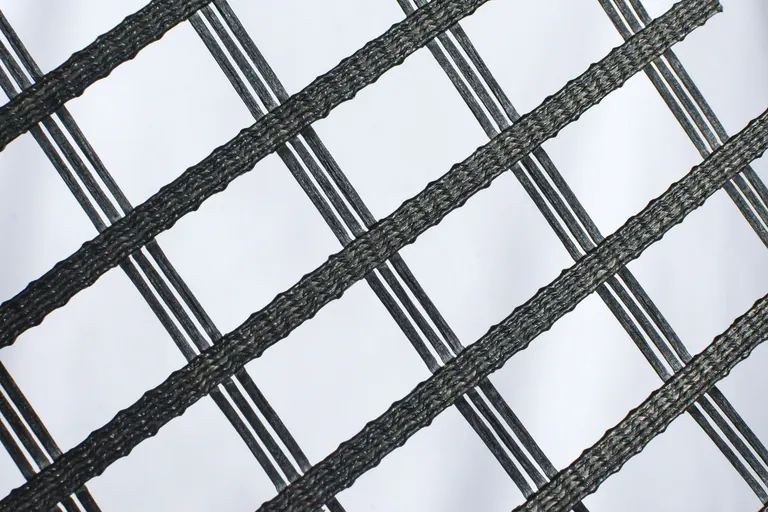
The project used TechGrid PET Uniaxial Geogrid.
Yes. Reinforced Soil Wall construction enabled the formation of high and stable bridge approaches within the available project footprint, supporting efficient land use.
The two-tiered Reinforced Soil Wall successfully met the project’s height, stability, and performance requirements. It provided reliable support for the highway and bridge approach infrastructure under challenging site conditions.
Yes. Reinforced Soil Walls are commonly used for bridge approaches, road embankments, flyovers, highway widening, railway infrastructure, and other projects requiring stable earth retention.