Home / Success Stories / Strengthening & Reconstruction of NH-752 in the State of Rajasthan
Kota, Rajasthan, India | Public Works Department, NH, RAJASTHAN
National Highway 752 (NH-752), which connects Aklera to Baran in Rajasthan, serves as a critical transportation corridor and a key route linking Kota to various other states. Spanning approximately 100 kilometers, this highway experiences heavy traffic volumes that have led to significant road distress, particularly in the form of reflective cracks.
If left untreated, these cracks could propagate through newly constructed bituminous concrete (BC) surfaces, compromising the road’s durability and safety. Addressing this issue was essential to maintaining the highway’s structural integrity and ensuring safe, efficient travel.
Reflective cracking represents a major challenge in road maintenance, as it leads to progressive degradation of the BC surface and necessitates costly, frequent repairs. Reconstructing the BC surface across such an extensive highway stretch would result in substantial maintenance expenditures, creating both financial burden and traffic disruption.
To tackle these challenges, the Public Works Department (National Highways), Rajasthan initiated the Strengthening and Reconstruction of specific segments along NH-752. The project targeted critical sections including:
The project’s objective was to enhance the structural integrity of these stretches, ensure the road’s longevity, reduce the need for costly repairs, and improve travel safety and efficiency along NH-752.
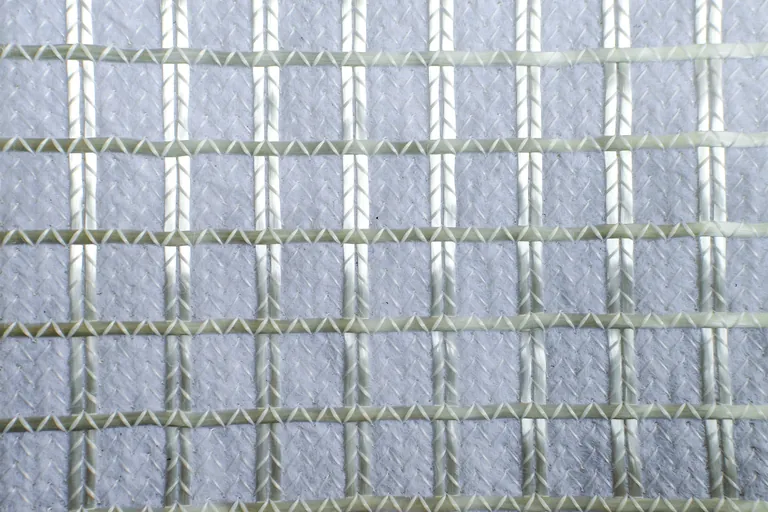
TechFab recommended the use of AIC 100 (Asphalt Interlayer Composite) as an interlayer system, in compliance with IRC SP 59:2019 guidelines. AIC is a composite material that integrates nonwoven geotextile and geogrid technologies, delivering exceptional strength, high modulus, and low creep characteristics.
Key Features of AIC 100
This advanced system is specifically engineered to enhance pavement durability and performance through:
Compliance with Standards
As outlined in IRC SP 59:2019 (Clause 5.7.6), AIC provides a reliable solution for strengthening pavement systems. By incorporating AIC as an interlayer, traffic-induced deformation stresses are effectively minimized, extending the road’s service life and reducing repair frequency.
This technology contributes to safer, more durable roads while minimizing long-term maintenance costs.
The project was successfully completed in February 2024, meeting all performance expectations. The client expressed satisfaction with both the high-quality product and the excellent service provided throughout the project.
This achievement demonstrates TechFab’s commitment to delivering reliable infrastructure solutions and maintaining strong client relationships, ensuring long-term performance and safety in road construction projects.
NH-752 is a critical transportation corridor in Rajasthan that connects Aklera to Baran. It also serves as a key route linking Kota to various other states, spanning approximately 100 kilometers.
The project aimed to strengthen and reconstruct specific segments of NH-752 to enhance structural integrity, ensure road longevity, reduce costly repairs, and improve travel safety and efficiency.
The highway experienced significant road distress due to heavy traffic volumes, particularly in the form of reflective cracks that threatened to propagate through newly constructed bituminous concrete (BC) surfaces.
Reflective cracks are cracks that originate in underlying pavement layers and propagate upward through newly applied surface layers. If left untreated, they can compromise the durability and safety of the road.
Reflective cracking leads to progressive degradation of the BC surface, necessitating costly and frequent repairs. It significantly reduces the service life of the pavement and increases maintenance expenditures.
Without intervention, the cracks would have propagated through new BC surfaces, compromising the road’s structural integrity, durability, and safety while leading to increased maintenance costs and traffic disruptions.
Reconstructing the BC surface across such an extensive highway stretch would have resulted in substantial maintenance expenditures, creating both financial burden and significant traffic disruption.
TechFab recommended the use of AIC 100 (Asphalt Interlayer Composite) as an interlayer system, in compliance with IRC SP 59:2019 guidelines.
The key features include:
AIC 100 complies with IRC SP 59:2019 guidelines, specifically Clause 5.7.6, which outlines specifications for strengthening pavement systems.
By minimizing traffic-induced deformation stresses, AIC 100 extends the road’s service life and reduces the frequency of repairs, thereby minimizing long-term maintenance costs.
Benefits include:
Yes, AIC 100 is specifically designed to ensure pavement stability under heavy traffic loads, making it ideal for high-traffic highways like NH-752.
Key outcomes included:
TECHGLASS AIC (Asphalt Interlayer Composite) was used, specifically the AIC 100 variant.