
Construction of Reinforced Soil Embankment using TechGrid Uniaxial Geogrid for Bridge Approach near the Intersection Between Highway No.117, Highway No.122, and Highway No.225

Nakhon Sawan Province, Thailand | Ministry Of Transport, Kingdom Of Thailand

Overview

The Nakhon Sawan Bypass represents a crucial highway intersection connecting Highway No. 117, Highway No. 122, and Highway No. 225 in Nakhon Sawan Province, Thailand. This strategic infrastructure project underwent major construction and improvement works to enhance traffic flow and regional connectivity.

The project scope included the construction of approach embankments for a bridge located near the highway intersection. However, the site presented multiple geotechnical challenges:

  • Weak subsoil conditions: Poor foundation soil requiring improvement
  • Limited right-of-way: Constrained space at the intersection
  • Steep slope requirements: Need for steep embankment slopes within limited footprint
  • Environmental factors: Seasonal rainfall and surface runoff issues

Challenge

Limitations of Conventional Solutions

Conventional retaining systems were evaluated but found inadequate:

  • Reinforced concrete walls: Costly and time-consuming
  • Gravity structures: Unsuitable for varying ground conditions
  • Both options: Difficult to accommodate differential settlements

Environmental Considerations

The area experiences:

  • Seasonal rainfall: Heavy monsoon precipitation
  • Surface runoff: Potential erosion and drainage issues
  • Unreinforced embankment risks: Settlement, erosion, or instability

Primary Engineering Challenge

The core challenge was to ensure:

  • Stability: Long-term embankment stability under traffic loads
  • Strength: Adequate strength to support heavy traffic and dynamic stresses
  • Performance: Long-term performance under challenging conditions
  • Cost-effectiveness: Economical solution within budget constraints
  • Construction efficiency: Rapid construction minimizing disruption

Required Solution Characteristics

A reliable and flexible soil reinforcement solution was needed that could:

  • Accommodate differential settlements
  • Reduce lateral earth pressures
  • Provide durable support to bridge approaches
  • Function effectively under challenging site and environmental conditions

Solution

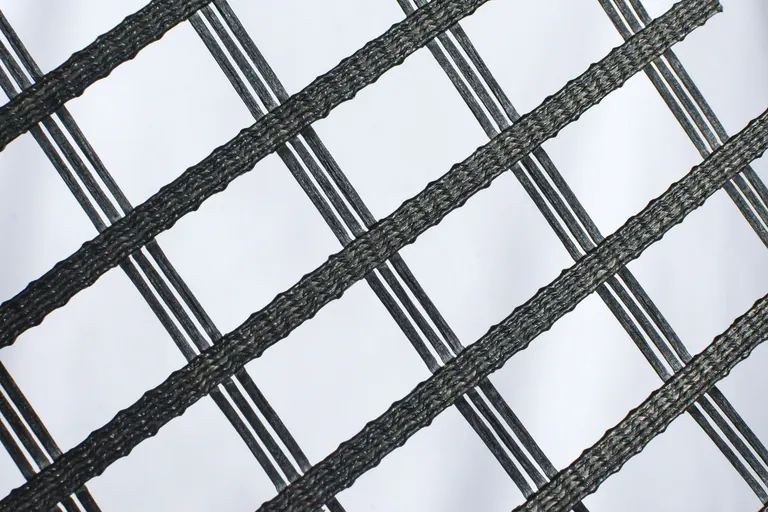
TechFab implemented a Reinforced Soil Embankment system using TechGrid Polyester Uniaxial Geogrids as a cost-effective, durable, and technically advanced alternative to conventional retaining structures.

TechGrid Polyester Uniaxial Geogrids

The high-strength polyester geogrids provided:

  • Excellent tensile capacity: High strength in the principal direction
  • Low creep characteristics: Minimal long-term deformation under load
  • Superior soil interaction: Effective interlocking with soil particles
  • Overall stability: Enhanced embankment performance

Reinforcement Configuration

TechGrid Uniaxial Geogrid was utilized for:

  • Reinforced soil slope fascia: Face protection and reinforcement
  • Soil reinforcement: Internal stability enhancement

Multi-layered reinforcement:

  • Placed at specific vertical intervals
  • Effectively distributes loads throughout the embankment
  • Minimizes deformation and settlement
  • Prevents potential slope failure or slippage

Steep Slope Construction

The use of geogrids enabled:

  • Steep embankment slopes: Reduced slope angle requirements
  • Reduced footprint area: Critical at the constrained intersection site
  • Space optimization: Maximum stability in minimum space

Soil Bag Fascia System

Construction details:

  • Reinforced unit composition: Soil bags placed up to 0.5 m from the fascia
  • Fascia bags: Half-filled with topsoil mixed with fertilizer
  • Remaining portion: Filled with suitable site-available fill material

Benefits of this arrangement:

  • Structural stability: Contributes to overall embankment stability
  • Vegetation growth: Topsoil and fertilizer promote plant growth
  • Aesthetics: Enhanced visual appearance through green facade
  • Sustainability: Environmentally compatible solution
  • Erosion control: Vegetation provides additional surface protection

The Reinforced Soil Embankment system using TechGrid Uniaxial Geogrids offers multiple advantages:

  • Cost-effectiveness: Economical compared to concrete retaining walls
  • Durability: Long-term performance with minimal maintenance
  • Technical advancement: Modern geosynthetic solution
  • Flexibility: Accommodates differential settlements
  • Rapid construction: Faster installation than conventional methods
  • Space efficiency: Enables steep slopes in constrained areas
  • Environmental compatibility: Vegetated fascia blends with surroundings
  • Load distribution: Efficient stress distribution throughout embankment

Project Outcome & Performance

The Reinforced Soil Embankment using TechGrid Polyester Uniaxial Geogrid provided a reliable, economical, and sustainable solution for the Nakhon Sawan Bypass project.

Key Achievements

  • Long-term stability: Ensured stable embankment performance
  • Efficient load distribution: Effective stress distribution under traffic loads
  • Enhanced aesthetics: Vegetated fascia improved visual appearance
  • Cost savings: Economical compared to conventional retaining structures
  • Construction efficiency: Rapid installation minimizing project timeline
  • Sustainability: Environmentally compatible solution with vegetation

Performance Demonstration

This project demonstrates the effectiveness of geosynthetics in modern highway and bridge approach construction, showcasing how advanced geosynthetic solutions can address complex geotechnical challenges while providing economical and sustainable infrastructure.

Frequently Asked Questions
(FAQs)

The Nakhon Sawan Bypass is a crucial highway intersection project connecting Highway No. 117, Highway No. 122, and Highway No. 225 in Nakhon Sawan Province, Thailand. The project underwent major construction and improvement works to enhance traffic flow and regional connectivity.

The project included the construction of approach embankments for a bridge located near the highway intersection, using reinforced soil technology with geogrid reinforcement.

The site presented multiple geotechnical challenges:

  • Weak subsoil conditions: Poor foundation soil requiring improvement
  • Limited right-of-way: Constrained space at the intersection
  • Steep slope requirements: Need for steep embankment slopes within limited footprint
  • Environmental factors: Seasonal rainfall and surface runoff issues

Conventional retaining systems were evaluated but found inadequate:

  • Reinforced concrete walls: Costly and time-consuming
  • Gravity structures: Unsuitable for varying ground conditions
  • Both options: Difficult to accommodate differential settlements

The area experiences:

  • Seasonal rainfall: Heavy monsoon precipitation
  • Surface runoff: Potential erosion and drainage issues
  • Risk to unreinforced embankments: Settlement, erosion, or instability

The core challenge was to ensure:

  • Stability: Long-term embankment stability under traffic loads
  • Strength: Adequate strength to support heavy traffic and dynamic stresses
  • Performance: Long-term performance under challenging conditions
  • Cost-effectiveness: Economical solution within budget constraints
  • Construction efficiency: Rapid construction minimizing disruption

The constrained space at the highway intersection required:

  • Steep embankment slopes to minimize footprint
  • Space-efficient solutions
  • Maximum stability in minimum space
  • Reduced land acquisition requirements

Differential settlements are uneven settling of the ground. They are problematic because:

  • Rigid structures (like concrete walls) can crack
  • Structural integrity is compromised
  • Maintenance costs increase
  • Service life is reduced

TechFab implemented a Reinforced Soil Embankment system using TechGrid Polyester Uniaxial Geogrids as a cost-effective, durable, and technically advanced alternative to conventional retaining structures.

TechGrid Polyester Uniaxial Geogrids from TechFab were used for soil reinforcement.

The high-strength polyester geogrids provide:

  • Excellent tensile capacity: High strength in the principal direction
  • Low creep characteristics: Minimal long-term deformation under load
  • Superior soil interaction: Effective interlocking with soil particles
  • Overall stability: Enhanced embankment performance

TechGrid Uniaxial Geogrid was utilized for two main purposes:

  • Reinforced soil slope fascia: Face protection and reinforcement
  • Soil reinforcement: Internal stability enhancement

Geogrid reinforcement:

  • Increases soil tensile strength
  • Distributes stresses throughout the embankment
  • Reduces lateral earth pressures
  • Creates internal stability
  • Prevents slippage along potential failure planes

The use of geogrids enabled:

  • Steep embankment slopes: Reduced slope angle requirements
  • Reduced footprint area: Critical at the constrained intersection site
  • Space optimization: Maximum stability in minimum space

Reinforced soil embankments can achieve slopes as steep as 45-70 degrees (depending on design), compared to 30-35 degrees for unreinforced soil slopes.

The soil bag fascia system is a construction technique where soil bags are placed near the face (fascia) of the embankment to provide formwork, erosion protection, and vegetation support.

Construction details:

  • Reinforced unit composition: Soil bags placed up to 0.5 m from the fascia
  • Fascia bags: Half-filled with topsoil mixed with fertilizer
  • Remaining portion: Filled with suitable site-available fill material

Benefits include:

  • Structural stability: Contributes to overall embankment stability
  • Vegetation growth: Topsoil and fertilizer promote plant growth
  • Aesthetics: Enhanced visual appearance through green facade
  • Sustainability: Environmentally compatible solution
  • Erosion control: Vegetation provides additional surface protection

Vegetation provides:

  • Additional surface erosion protection
  • Root reinforcement of surface soil
  • Aesthetic improvement (green appearance)
  • Environmental compatibility
  • Natural integration with surroundings

The system offers multiple advantages:

  • Cost-effectiveness: Economical compared to concrete retaining walls
  • Durability: Long-term performance with minimal maintenance
  • Technical advancement: Modern geosynthetic solution
  • Flexibility: Accommodates differential settlements
  • Rapid construction: Faster installation than conventional methods
  • Space efficiency: Enables steep slopes in constrained areas
  • Environmental compatibility: Vegetated fascia blends with surroundings
  • Load distribution: Efficient stress distribution throughout embankment

The reinforced soil embankment system is more economical than concrete retaining walls due to:

  • Lower material costs
  • Faster construction
  • Less foundation preparation
  • Minimal maintenance requirements
  • Use of local fill materials

Flexibility allows the embankment to:

  • Accommodate differential settlements without cracking
  • Adjust to ground movements
  • Maintain structural integrity
  • Reduce maintenance needs

Environmental compatibility comes from:

  • Vegetated fascia blending with surroundings
  • Use of local fill materials
  • Minimal site disturbance
  • Natural appearance
  • Sustainable vegetation growth

Key achievements include:

  • Long-term stability: Ensured stable embankment performance
  • Efficient load distribution: Effective stress distribution under traffic loads
  • Enhanced aesthetics: Vegetated fascia improved visual appearance
  • Cost savings: Economical compared to conventional retaining structures
  • Construction efficiency: Rapid installation minimizing project timeline
  • Sustainability: Environmentally compatible solution with vegetation

Long-term stability is ensured through:

  • High-strength polyester geogrids with low creep
  • Multi-layered reinforcement distribution
  • Effective soil-geogrid interaction
  • Proper drainage and erosion control
  • Vegetated surface protection

Aesthetics were enhanced through:

  • Vegetated fascia with green appearance
  • Natural integration with surroundings
  • Clean, uniform slope faces
  • Environmentally compatible design

This project demonstrates geosynthetic effectiveness by:
  • Successfully addressing complex geotechnical challenges
  • Providing economical and sustainable infrastructure
  • Enabling construction in constrained sites
  • Delivering long-term performance
  • Showcasing modern highway construction techniques