Improvement of 4 Lane Divided Highway from Km 63 to Km 120 of NH-11, Bharatpur Mahua Section of Agra Jaipur Road in Rajasthan

Rajasthan, India | National Highways Authority Of India (NHAI)

Overview

The Bharatpur–Mahua section (KM 63 to KM 120) of NH-11 on the Agra–Jaipur corridor in Rajasthan is subjected to heavy traffic volumes and intense monsoon rainfall. These conditions led to progressive fatigue cracking and deterioration of the existing pavement, necessitating frequent maintenance interventions.

Challenge

The highway experienced:

  • Repeated fatigue cracking due to high axle loads and continuous traffic stress
  • Monsoon-induced water infiltration into cracks, accelerating pavement weakening and crack propagation
  • Continuous cracks approximately 5 mm deep, requiring regular patching and overlays
  • Significant direct maintenance costs (materials, labor, equipment) and indirect costs (traffic delays, user discomfort, safety risks)

Without a durable, long-term solution, the cycle of cracking → water ingress → further deterioration would continue, compromising ride quality and pavement life.

Solution

To break this cycle, a long-term rehabilitation strategy was adopted focusing on two critical needs:

  • Preventing water infiltration into the pavement structure
  • Absorbing and redistributing traffic-induced stresses to delay reflective and fatigue cracking

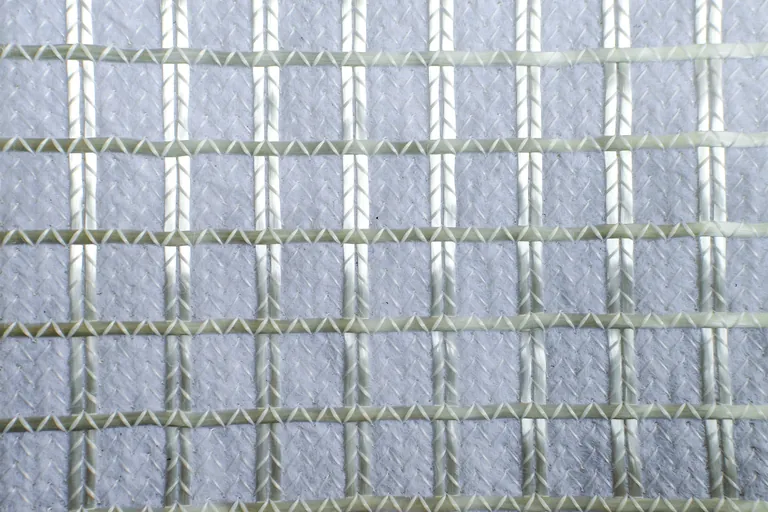
TechGlass AIC (Asphalt Interlayer Composite) was recommended as a dual-function interlayer:

  • Moisture barrier: Limits vertical water migration into underlying layers
  • SAMI (Stress-Absorbing Membrane Interlayer): Dissipates tensile and shear stresses at crack tips, delaying crack propagation into the new overlay

Installation approach:

  • Existing cracks (~5 mm depth) were treated with crack sealant and a leveling course where necessary
  • TechGlass AIC was laid in a taut condition over a tack coat to ensure strong bonding with the subsequent asphalt overlay
  • The system leverages low-strain glass fiber strands embedded in a composite matrix to reinforce the asphalt layer while providing impermeability

This approach enhances the fatigue resistance and durability of the rehabilitated pavement under heavy traffic and wet conditions.

Project Outcome & Performance

The implementation of TechGlass AIC aimed to:

  • Significantly reduce the frequency of maintenance cycles
  • Extend the service life of the asphalt overlay
  • Improve ride quality and safety by minimizing crack reflection and water-induced distress
  • Deliver a cost-effective, long-term solution for a high-traffic national highway in a monsoon-prone region
Related Sectors
Related Solutions
Related Products

Frequently Asked Questions
(FAQs)

It is a pavement rehabilitation project on the 4-lane divided highway from KM 63 to KM 120 of NH-11 (Agra–Jaipur corridor) in Rajasthan, executed for the National Highways Authority of India (NHAI). The section experiences heavy traffic and intense monsoon rainfall, leading to recurrent fatigue cracking and frequent maintenance.

Key distress mechanisms included:

  • Fatigue cracking from high axle loads and continuous traffic stress
  • Monsoon water infiltration through cracks, weakening underlying layers and accelerating crack growth
  • Continuous cracks ~5 mm deep, requiring regular patching and overlays
  • High direct costs (materials, labor, equipment) and indirect costs (delays, safety risks, user discomfort)

Traditional asphalt overlays alone:

  • Did not prevent water ingress through existing cracks
  • Offered limited resistance to reflective/fatigue cracking under heavy traffic
  • Resulted in short overlay life and frequent re-maintenance
  • Increased lifecycle costs and traffic disruptions over time

TechGlass AIC (Asphalt Interlayer Composite) was installed as a dual-function interlayer between the prepared existing surface and the new asphalt overlay. It provides:

  • Moisture barrier: Limits vertical water migration into the pavement structure
  • SAMI (Stress-Absorbing Membrane Interlayer): Absorbs and redistributes tensile/shear stresses at crack tips to delay crack propagation

TechGlass AIC combines:

  • Low-strain glass fiber strands for tensile reinforcement and crack arrest
  • A composite matrix that acts as an impermeable layer

When laid over a tack coat in a taut condition, it:

  • Bonds effectively with the overlay
  • Blunts crack tips and spreads stresses over a wider area
  • Reduces water-driven stripping and softening of underlying layers
  • Extends the fatigue life of the asphalt overlay
  • Existing cracks (~5 mm depth) were treated with crack sealant
  • A leveling course was applied where required to ensure a smooth, uniform surface
  • The surface was cleaned and a tack coat sprayed to promote adhesion
  • TechGlass AIC was then laid taut to avoid wrinkles and ensure full contact with the overlay
  • Reduced maintenance frequency: Longer intervals between overlays and patching
  • Extended overlay service life: Improved resistance to reflective and fatigue cracking
  • Better ride quality: Smoother surface with fewer recurrent cracks
  • Enhanced safety: Less water-induced distress and pothole formation
  • Lower lifecycle cost: Fewer interventions and reduced user delay costs

TechGlass AIC (Asphalt Interlayer Composite) – a glass-fiber-reinforced asphalt interlayer providing moisture barrier and SAMI (stress-absorbing membrane) functions for long-life asphalt overlay rehabilitation.