Home / Success Stories / Railway Ballast Stabilisation using TechGrid PP Biaxial Geogrid and TechGeo Nonwoven Geotextile at Chavaj near Bharuch, Gujarat
Bharuch, Gujarat, India | Western Railways
Bharuch Junction is a strategically important railway station on the Western Railway network, situated on the heavily trafficked Vadodara–Mumbai corridor in Gujarat. This route is one of the busiest and fully electrified lines of Indian Railways, also serving the Mumbai Suburban Railway in its southern section. Chavaj, located near Bharuch, forms part of this critical infrastructure where track stability directly impacts operational safety and efficiency.
With increasing axle loads and Gross Million Tonnes (GMT) of traffic, ensuring formation stability and minimizing track maintenance has become a priority for the Western Railway authority.
During site inspections along the Chavaj stretch, several geotechnical and operational issues were identified:
1. Formation Cracking:
2. Monsoon Vulnerability:
3. Bearing Capacity Deficiency:
These challenges necessitated an alternative, cost-effective solution to strengthen the formation and prevent differential settlements without extensive material import.
Based on site observations and soil testing results, the Western Railway authority recommended a geosynthetic-based formation treatment for a 6.00 km project stretch at Chavaj.
Proposed System:
A dual-layer geosynthetic reinforcement system was installed just below the ballast layer in the proposed typical cross-section:
1. TechGeo PP Nonwoven Geotextile (Separator Layer)
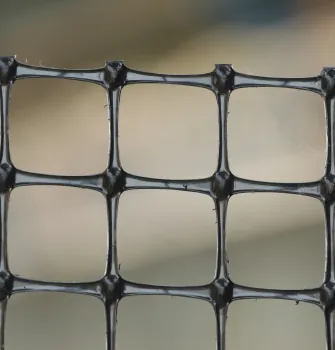
2. TechGrid PP Biaxial Geogrid (Reinforcement Layer)
Construction Approach:
Key Advantages:
This project demonstrates the effectiveness of geosynthetic reinforcement as a sustainable alternative to conventional blanket layer rehabilitation for railway formation stabilization.
It is a formation rehabilitation and ballast stabilization initiative on the Western Railway network at Chavaj, near Bharuch, Gujarat, on the busy Vadodara–Mumbai corridor. The project covered a 6.00 km stretch where highly shrinkable soils were causing summer cracking, monsoon-induced swelling, and track geometry distortions. The solution employed a dual-layer geosynthetic system—TechGrid PP Biaxial Geogrid and TechGeo PP Nonwoven Geotextile—installed just below the ballast to enhance bearing capacity and reduce maintenance. The client is Western Railways.
The Chavaj section exhibited a combination of geotechnical and operational challenges:
Without intervention, these issues would result in repeated track renewals, speed restrictions, and higher lifecycle costs.
A two-layer system was placed immediately below the ballast in the typical cross-section:
Layer 1 (Bottom): TechGeo PP Nonwoven Geotextile
Layer 2 (Top): TechGrid PP Biaxial Geogrid
This configuration strengthens the formation–ballast interface without requiring a thick granular blanket.
The biaxial geogrid enhances track bed behavior through multiple mechanisms:
The nonwoven geotextile provides three critical functions:
Together, these functions maintain the integrity and longevity of the reinforced layer.
The geosynthetic approach addressed key project constraints:
The construction sequence was optimized for minimal disruption:
Geosynthetics’ light weight and roll format enabled quick deployment during short possession windows.
Post-commissioning observations on the 6.00 km Chavaj stretch indicated: