Home / Solutions / Ground Improvement / Industrial & Logistics Applications
Ground improvement is essential for industrial and logistics developments where large storage yards, warehouses, manufacturing facilities, container-handling areas, and heavy vehicle routes require high load-bearing capacity and minimal settlement.
These projects often cover large areas with soft, reclaimed, variable, or weak subsoil. Basal reinforcement and other geosynthetic systems improve Safe Bearing Capacity, distribute static and dynamic loads, and support uniform ground performance. Controlling total and differential settlement is critical for maintaining pavement integrity, equipment operation, structural performance, and long-term facility efficiency.
TechFab provides reliable and cost-effective ground improvement solutions tailored to the requirements of high-performance industrial and logistics infrastructure.
Overview
Success Stories
Products
Resources
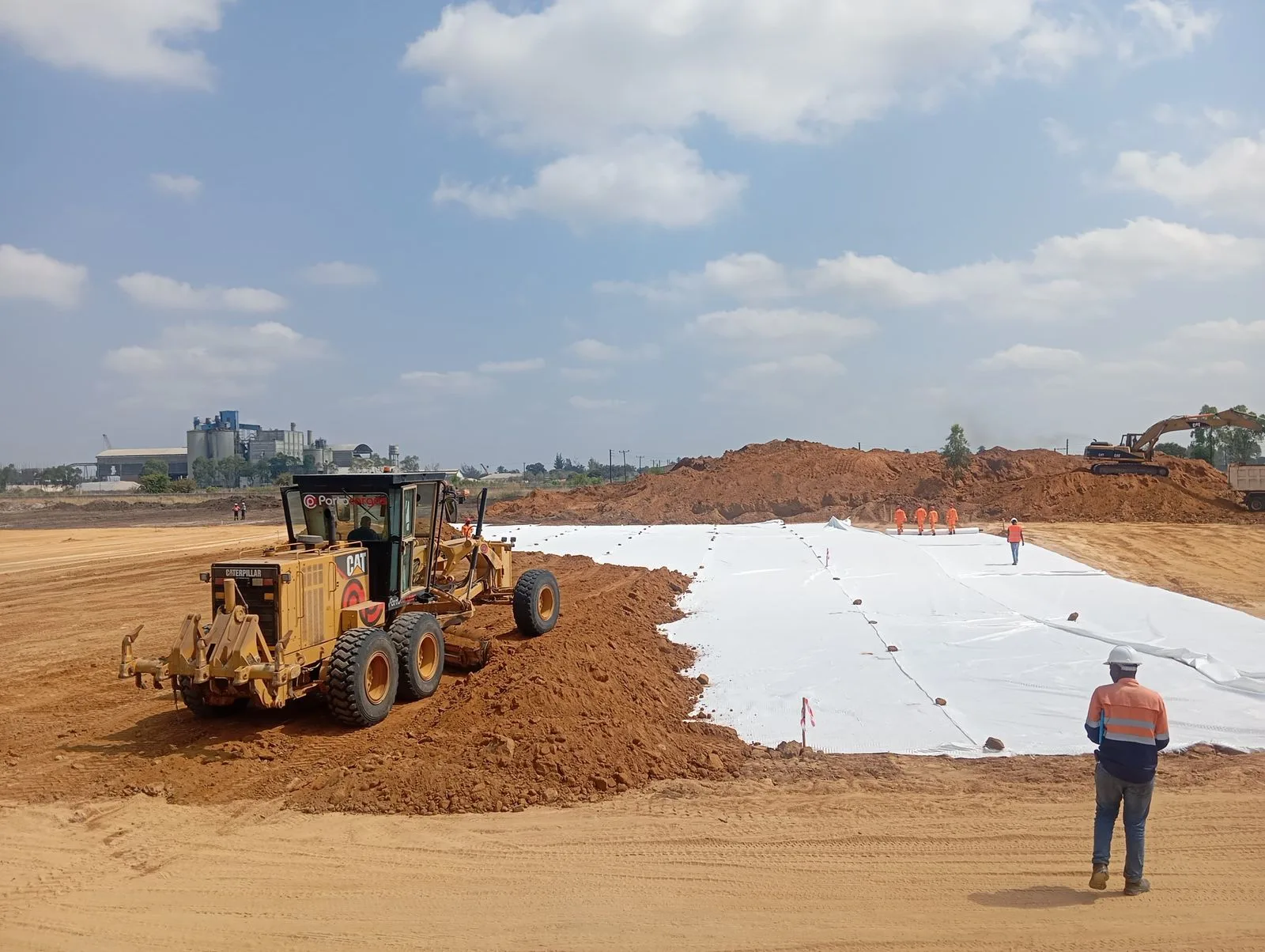
Industrial and logistics facilities require large, uniformly stable ground surfaces capable of supporting warehouses, manufacturing plants, storage tanks, container-handling equipment, heavy vehicle traffic, and operational machinery. Ground improvement systems help transform weak or variable subsoil into reliable foundation, pavement, and working platforms.
These solutions improve soil strength, stiffness, confinement, drainage, and load-transfer behavior. As a result, they reduce the risk of excessive settlement, differential movement, rutting, and structural distress throughout the service life of the facility.
Ground improvement is particularly important for developments constructed over:
Without suitable treatment, these conditions can lead to uneven settlement, pavement damage, drainage problems, equipment misalignment, and operational interruptions.
TechFab offers a comprehensive range of geosynthetic ground improvement solutions, including geocells, biaxial geogrids, and woven and nonwoven geotextiles. These systems can be used independently or in optimized combinations to address project-specific requirements.
Supported by technical expertise and design assistance, TechFab helps develop ground improvement solutions that enhance performance, reduce material consumption, control settlement, and support efficient project execution.
Available Systems
TechCell Geocell System for Ground Improvement
TechCell is a lightweight, high-strength, three-dimensional cellular confinement system manufactured from HDPE. It confines weak soil or infill material, improves load-bearing capacity, distributes loads more effectively, and controls surface deformation.
Typical applications: Industrial yards, roadways, railway tracks, landfill areas, access roads, working platforms, and heavy-duty surfaces.
TechFab Biaxial Geogrid System for Basal Reinforcement
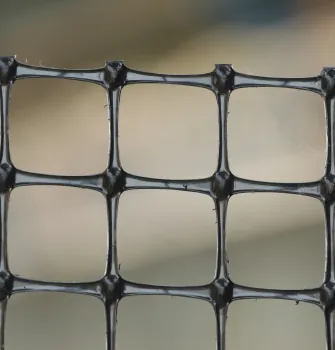
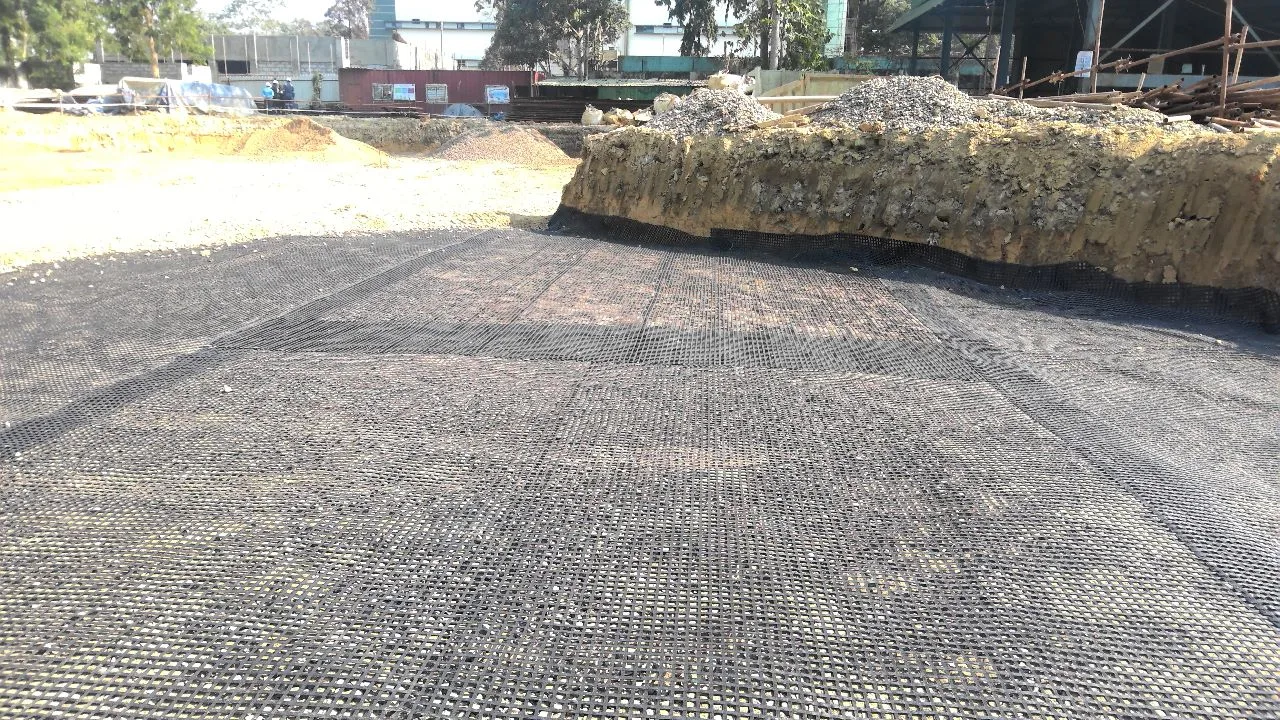
TechFab Biaxial Geogrid is an integrally formed polypropylene geogrid that provides tensile reinforcement in two directions. It improves soil interlock and confinement, enhances load distribution, and supports subgrade stabilization beneath heavily loaded areas.
Typical applications: Subgrade stabilization, basal reinforcement, working platforms, load-transfer platforms, industrial yards, embankments, and logistics infrastructure.
TechFab Geotextile for Ground Improvement
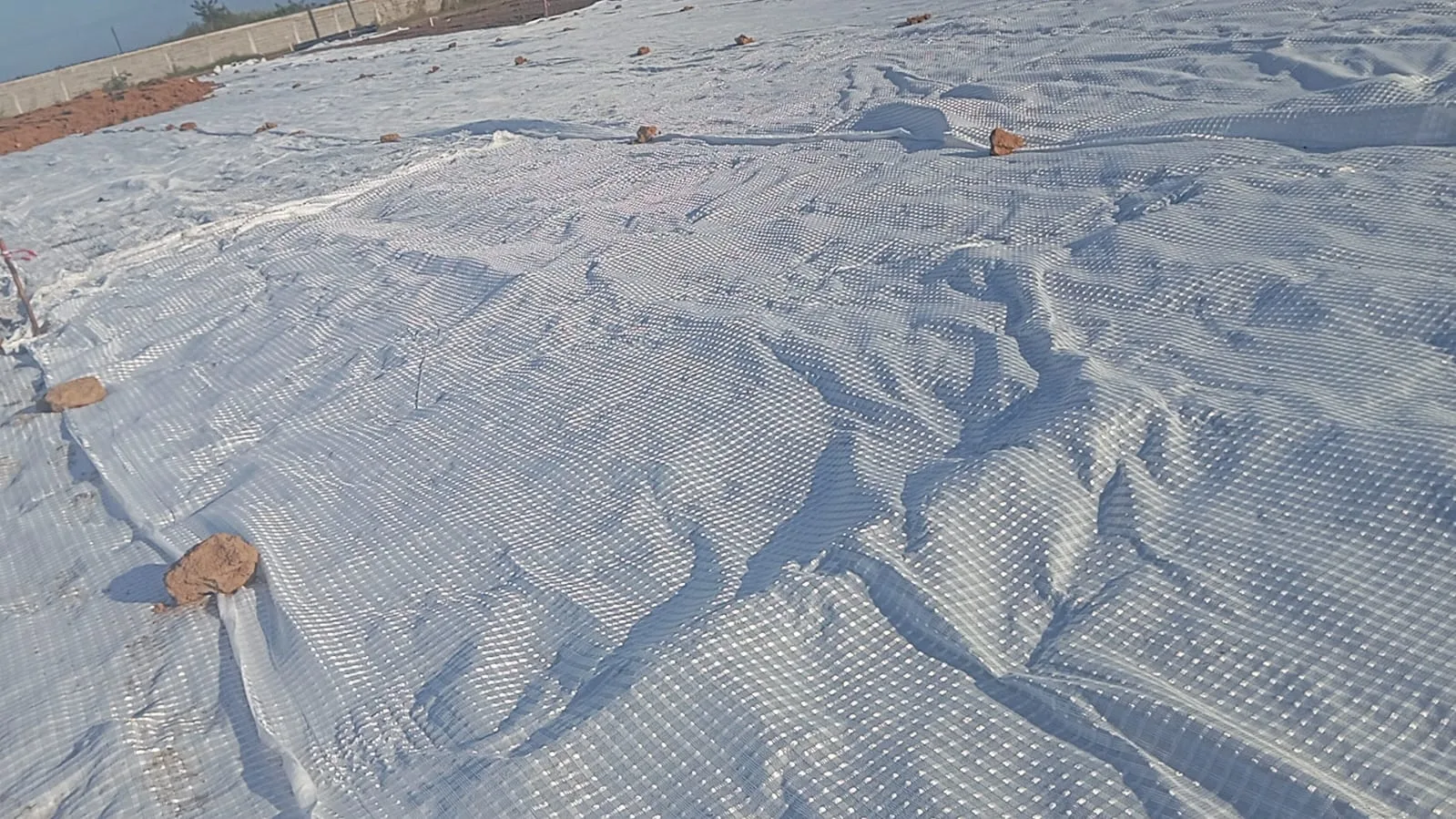
TechFab woven and nonwoven geotextiles provide separation, filtration, reinforcement, and drainage. They help prevent the intermixing of subgrade and fill materials while providing controlled permeability, tensile strength, and durability in demanding soil environments.
Typical applications: Subgrade stabilization, basal reinforcement, separation layers, drainage systems, coastal protection, industrial platforms, and logistics developments.
Industrial and logistics facilities often include large warehouses, storage yards, container-handling areas, storage tanks, and heavy vehicle routes. Ground improvement provides the bearing capacity, uniform support, and settlement control needed for safe and efficient operations.
Ground improvement may be required where projects are built over:
Key benefits include:
Safe Bearing Capacity is the maximum pressure that the improved ground can safely support without unacceptable shear failure or settlement. Ground improvement helps increase the effective load-bearing capacity of weak or variable soil.
It improves soil strength, stiffness, confinement, drainage, and load-transfer behavior. This creates a more stable platform for warehouses, manufacturing facilities, storage tanks, container-handling areas, and other heavily loaded infrastructure.
Controlled settlement helps maintain level pavements, storage yards, container areas, access roads, and equipment operating surfaces. Excessive or uneven settlement can affect vehicle movement, drainage, loading operations, equipment alignment, and facility performance.
Total settlement is the overall downward movement of the ground. Differential settlement is the difference in settlement between adjacent areas. Differential settlement is particularly important because it can cause cracking, uneven surfaces, drainage problems, and structural distress.
Geosynthetics can reinforce, confine, separate, filter, and drain soil and fill materials. Their function depends on the product used and may include improving load distribution, preventing material intermixing, reducing deformation, and managing water movement.
TechFab offers:
These products may be used individually or in combination, depending on project conditions.
A geocell confines the infill material within a three-dimensional cellular structure. This reduces lateral spreading, improves load distribution, limits surface deformation, and increases the stability of the yard or working platform.
A biaxial geogrid interacts with aggregate and soil through interlocking and friction. This helps distribute heavy static and dynamic loads over a wider area and improves the performance of the underlying subgrade.
Geotextiles can separate weak subgrade from aggregate, allow water to pass through, prevent soil migration, and provide reinforcement where required. This helps maintain the integrity and drainage performance of the ground improvement system.
Yes. TechCell and TechGrid systems can be used for heavy vehicle access roads, haul routes, logistics corridors, loading areas, and industrial pavements when designed for the expected traffic and axle loads.
Applications include:
Selection depends on:
It can reduce costs by optimizing material quantities, reducing the need for extensive soil replacement, improving construction efficiency, and potentially reducing foundation or pavement requirements. Actual savings depend on the site-specific design and construction conditions.
Yes. By improving ground conditions and reducing the need for extensive excavation, replacement, or prolonged settlement periods, ground improvement can support faster construction. The actual schedule benefit depends on the chosen system and site conditions.
Yes. Reclaimed land often contains variable or compressible fill and may require reinforcement, separation, drainage, or confinement. TechFab systems can be selected or combined to address these conditions.
TechFab can provide technical support including site assessment, product selection, ground improvement design assistance, material recommendations, construction guidance, and project-specific coordination.
Geosynthetic ground improvement can reduce imported fill, material consumption, excavation, transportation, and maintenance requirements. Longer-lasting pavements and platforms can also reduce the environmental impact associated with repeated repairs.