Pavement Stabilization of E10, E14 & N16 Roads in Amaravati, Andhra Pradesh

Amaravati, Andhra Pradesh, India | Amaravati Development Corporation LTD. (ADCL)

Overview

Amaravati, the planned capital city of Andhra Pradesh, is envisioned as a global economic hub endowed with world-class infrastructure to attract people, investments, and jobs. The city’s road network has been meticulously planned to align with this ambitious vision.

However, a major engineering challenge emerged: the entire city is being developed on agricultural fields underlain by Black Cotton Soil (BCS) with a swelling index exceeding 200%. To ensure durable, long-lasting road infrastructure, the government adopted global geosynthetic technologies to strengthen the pavement structure against the adverse effects of expansive soils.

Challenge

Geotechnical investigations revealed that the subgrade soil across the project site (Roads E10, E14 & N16) consisted predominantly of:

  • Highly plastic clay (Black Cotton Soil / Montmorillonite clay)
  • Soaked CBR (California Bearing Ratio): As low as 2%
  • Free Swell Index: Approximately 200%

These potentially expansive soils undergo significant volumetric changes with seasonal variations in moisture content (wetting during monsoons, drying in summer), leading to:

  • Pavement distortion and unevenness
  • Longitudinal and transverse cracking
  • Reduced service life and increased maintenance costs

The problem is further aggravated by semi-arid climatic conditions characterized by pronounced short wet periods followed by long dry spells, intensifying the swelling-shrinkage cycle.

Solution

After comprehensive evaluation, a dual-layer geosynthetic stabilization system was implemented at the subgrade level:

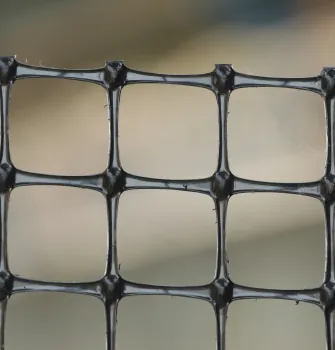
1. TechGrid PP Biaxial Geogrid (30/30 kN/m)

  • Material: Punched and drawn polypropylene (PP) with high junction efficiency
  • Function: Reinforcement of the granular base and sub-base layers
  • Mechanisms:
  • Lateral restraint: Confines aggregate particles within grid apertures, preventing lateral spreading
  • Improved bearing capacity: Enhances load distribution over weak subgrade
  • Tensioned membrane effect: Distributes wheel loads over a wider area, reducing stress intensity on the subgrade

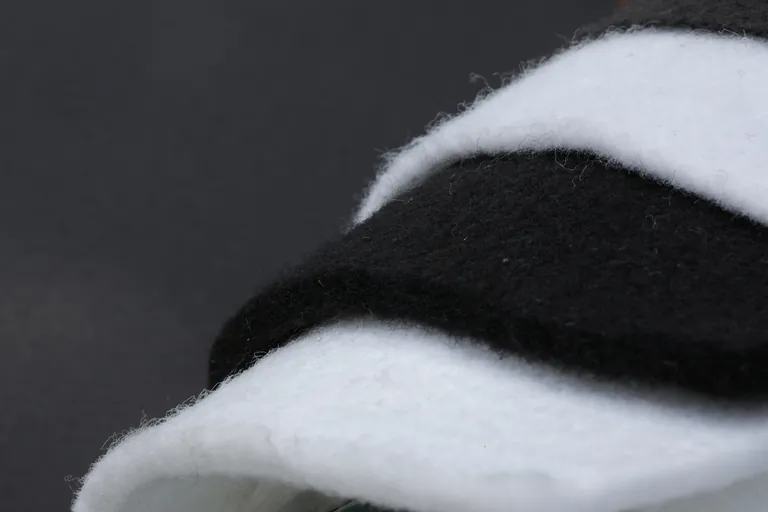
2. TechGeo PN25 Nonwoven Geotextile

  • Material: High-quality polypropylene staple fibers
  • Function: Separation and filtration between subgrade and granular layers
  • Benefits:
  • Prevents intermixing of weak BCS with granular base/sub-base materials
  • Dissipates pore water pressure, allowing controlled drainage
  • Filters fine particles while permitting water flow, reducing pumping and intrusion

Subgrade Preparation Strategy:

  • A 0.5 m thick sand layer was first placed over the existing BCS to mitigate free swell effects
  • TechGrid PP Biaxial Geogrid was then installed over the sand layer to:
  • Further enhance elastic modulus of the prepared subgrade
  • Laterally transfer soil thrust generated by swelling, nullifying its impact at the subgrade level
  • Disperse superstructure loads over a wider area, reducing load intensity on the underlying expansive soil
  • TechGeo Nonwoven Geotextile was placed below the geogrid to address the shallow groundwater table condition

Expected Performance Benefits

  • Crack prevention: TechGrid PP Biaxial reinforcement significantly reduces longitudinal cracking compared to unreinforced sections (which typically crack within months)
  • Superior junction efficiency: Polypropylene biaxial geogrids outperform polyester alternatives due to higher junction strength (bonded portion of longitudinal and transverse ribs)
  • Aggregate interlock: Sufficiently sized apertures enable effective mechanical interlocking with surrounding granular materials
  • Increased stiffness: Biaxial geogrid enhances the stiffness of unbound aggregate base layers, confining particles under repetitive traffic loading
  • Strain minimization: Improved elastic modulus reduces tensile strains induced by subgrade expansiveness
  • Long-term durability: Separation and filtration functions preserve granular layer integrity throughout the pavement’s design life

Project Outcome & Performance

  • TechFab supplied the entire quantity of TechGrid Geogrid and TechGeo Geotextile within the stipulated timeline, meeting all quality specifications
  • Granular layers (base and sub-base) were completed successfully by the contractor
  • Amaravati Development Corporation (ADCL) and Project Management Consultants (PMC) expressed full satisfaction with material quality and installation
  • Bituminous layers (binder and wearing course) are scheduled for subsequent construction phases

Frequently Asked Questions
(FAQs)

It is a subgrade stabilization initiative for roads E10, E14, and N16 in Amaravati, the planned capital city of Andhra Pradesh. The project addresses the challenge of constructing durable road infrastructure over Black Cotton Soil (BCS) with a free swell index exceeding 200%. The client is Amaravati Development Corporation Ltd. (ADCL), and the solution employs TechGrid PP Biaxial Geogrid and TechGeo PP Nonwoven Geotextile to reinforce and protect the pavement structure.

Black Cotton Soil, also known as Montmorillonite clay, is a highly expansive soil that undergoes significant volumetric changes with moisture variation:

  • Swells when wet (monsoon season), exerting upward pressure on pavement layers
  • Shrinks when dry (summer), creating voids and loss of support
  • Soaked CBR as low as 2%, indicating extremely weak load-bearing capacity
  • Free swell index ~200%, meaning the soil can double in volume when saturated

These characteristics lead to pavement distortion, cracking, unevenness, and premature failure if not properly mitigated.

  • Subgrade composition: Predominantly highly plastic clay (BCS)
  • Low bearing capacity: Soaked CBR of 2%
  • High expansiveness: Free swell index of ~200%
  • Climatic aggravation: Semi-arid conditions with short, intense wet periods followed by prolonged dry spells, intensifying the swelling-shrinkage cycle
  • Shallow groundwater table: Increases risk of pore water pressure buildup and soil pumping into granular layers

Without intervention, these roads would experience longitudinal and transverse cracking within months of construction.

A dual-layer stabilization system was installed at the subgrade level:

Layer 1 (Bottom): TechGeo PN25 Nonwoven Geotextile

  • Function: Separation and filtration
  • Material: Polypropylene staple fibers
  • Benefits: Prevents intermixing of BCS with granular layers, dissipates pore water pressure, allows controlled drainage

Layer 2 (Top): TechGrid PP Biaxial Geogrid (30/30 kN/m)

  • Function: Reinforcement and load distribution
  • Material: Punched and drawn polypropylene with high junction efficiency
  • Benefits: Lateral restraint, improved bearing capacity, tensioned membrane effect

Subgrade preparation: A 0.5 m thick sand layer was first placed over the existing BCS to mitigate free swell effects before installing the geosynthetics.

The geogrid enhances pavement stability through three primary mechanisms:

  • Lateral Restraint (Confinement):
  • Aggregate particles interlock within the geogrid apertures
  • Prevents lateral spreading of base/sub-base materials under traffic loads
  • Maintains layer thickness and structural integrity
  • Improved Bearing Capacity:
  • Distributes wheel loads over a wider area
  • Reduces stress intensity on the weak BCS subgrade
  • Enhances overall pavement stiffness
  • Tensioned Membrane Effect:
  • Geogrid acts as a tensile element, bridging localized weak spots
  • Laterally transfers soil thrust generated by BCS swelling
  • Nullifies upward pressure at the subgrade level

Research and case histories demonstrate that PP biaxial geogrids outperform PET geogrids in this application due to:

  • Higher junction efficiency: Stronger bonds between longitudinal and transverse ribs prevent grid failure under load
  • Better performance in expansive soils: PP grids maintain integrity despite cyclic swelling-shrinkage movements
  • Optimal aperture size: Enables effective mechanical interlock with granular base materials
  • Proven durability: Punched and drawn PP material resists creep and maintains long-term tensile strength

The nonwoven geotextile serves two critical functions:

Separation:

  • Prevents intermixing of weak BCS subgrade with granular base/sub-base layers
  • Maintains distinct layer boundaries throughout the pavement’s design life
  • Stops intrusion/pumping of fine soil particles into coarser granular materials

Filtration:

  • Dissipates pore water pressure by allowing controlled water flow
  • Filters fine particles while permitting fluid passage across the geotextile plane
  • Reduces risk of hydrostatic pressure buildup under the pavement, especially important with a shallow groundwater table

The sand layer acts as a buffer zone between the expansive BCS and the pavement structure:
  • Mitigates free swell effects: Sand is non-expansive, reducing direct upward pressure on the pavement
  • Provides a stable working platform: Enables proper compaction and geogrid installation
  • Enhances drainage: Sand’s higher permeability facilitates water movement away from the subgrade
  • Works synergistically with geogrid: The geogrid further stabilizes the sand layer, enhancing its elastic modulus and load distribution capability
  • Crack prevention: Significant reduction in longitudinal cracking compared to unreinforced sections (which typically crack within months)
  • Extended service life: Pavement distortion and unevenness minimized, reducing maintenance frequency and costs
  • Enhanced stiffness: Biaxial geogrid increases the elastic modulus of the granular layers, reducing tensile strains induced by subgrade movement
  • Load distribution: Wheel loads dispersed over a wider area, lowering stress on the weak BCS subgrade
  • Long-term durability: Separation and filtration functions preserve granular layer integrity for the full design life
  • TechFab supplied all TechGrid Geogrid and TechGeo Geotextile materials on schedule, meeting all quality specifications
  • Granular layers (base and sub-base) completed successfully by the contractor
  • ADCL and Project Management Consultants (PMC) expressed full satisfaction with:
  • Material quality and technical performance
  • Timely delivery and logistical support
  • Installation quality and workmanship
  • Bituminous layers (binder and wearing course) are scheduled for subsequent construction phases
  • TechGrid PP Biaxial Geogrid (30/30 kN/m) – For subgrade reinforcement, lateral restraint, and load distribution
  • TechGeo PP Nonwoven Geotextile (PN25) – For separation, filtration, and drainage between subgrade and granular layers