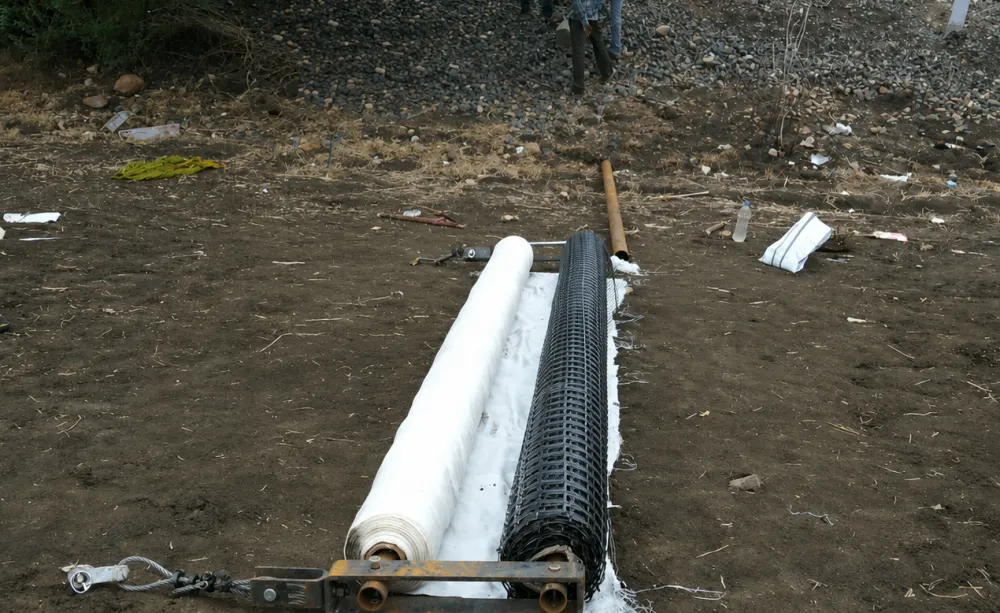
Geosynthetics improve load distribution and enhance the bearing capacity of the railway foundation, enabling optimisation of the blanket layer thickness while maintaining the required structural performance and long-term track stability. By reinforcing weak subgrades and separating granular materials from the underlying soil, these systems reduce blanket material requirements without compromising railway safety or performance.
They help control differential settlement, improve the stability of the track foundation, and maintain effective drainage within the track structure. These solutions are widely used in new railway track construction, weak subgrade improvement, heavy-haul rail corridors, and high-speed rail networks to deliver cost-effective and sustainable railway infrastructure.
Overview
Products
Success Stories
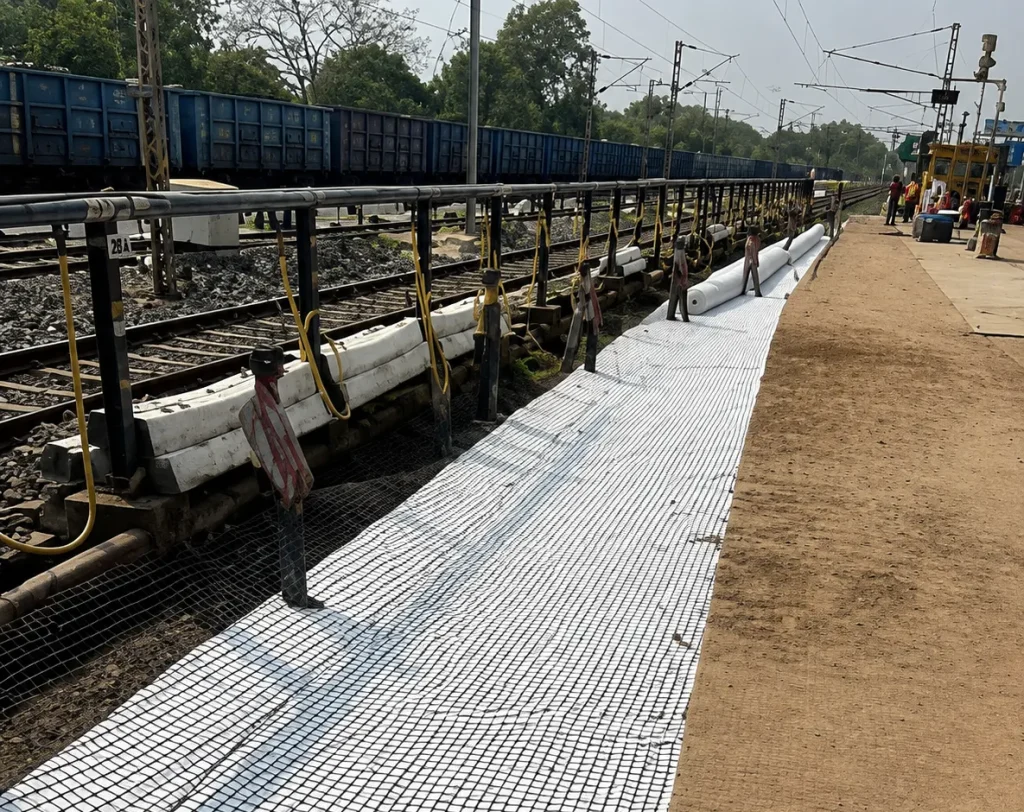
Blanket layer thickness reduction is an effective approach to optimising railway foundation design while maintaining the required structural performance and long-term track stability. TechFab provides engineered geosynthetic solutions that improve load distribution, reinforce weak subgrades, and separate foundation layers, enabling a reduction in blanket thickness without compromising railway safety or performance.
By reinforcing the track foundation and improving stress distribution, geosynthetics help reduce the demand for granular blanket material. Separation and filtration functions also prevent the migration of fine soils into granular layers, preserving drainage efficiency and maintaining the long-term integrity of the track structure.
These systems are widely used in new railway construction, heavy-haul rail corridors, and high-speed rail projects. They help reduce material consumption, accelerate construction, lower project costs, and deliver durable, sustainable railway infrastructure with reliable long-term performance.
Blanket layer thickness reduction is a railway foundation design approach that uses geosynthetics to optimise the thickness of the granular blanket layer while maintaining the required structural performance and long-term track stability.
Geosynthetics improve load distribution and enhance the bearing capacity of the railway foundation. This allows the blanket layer to be optimised without compromising track safety, performance, or long-term stability.
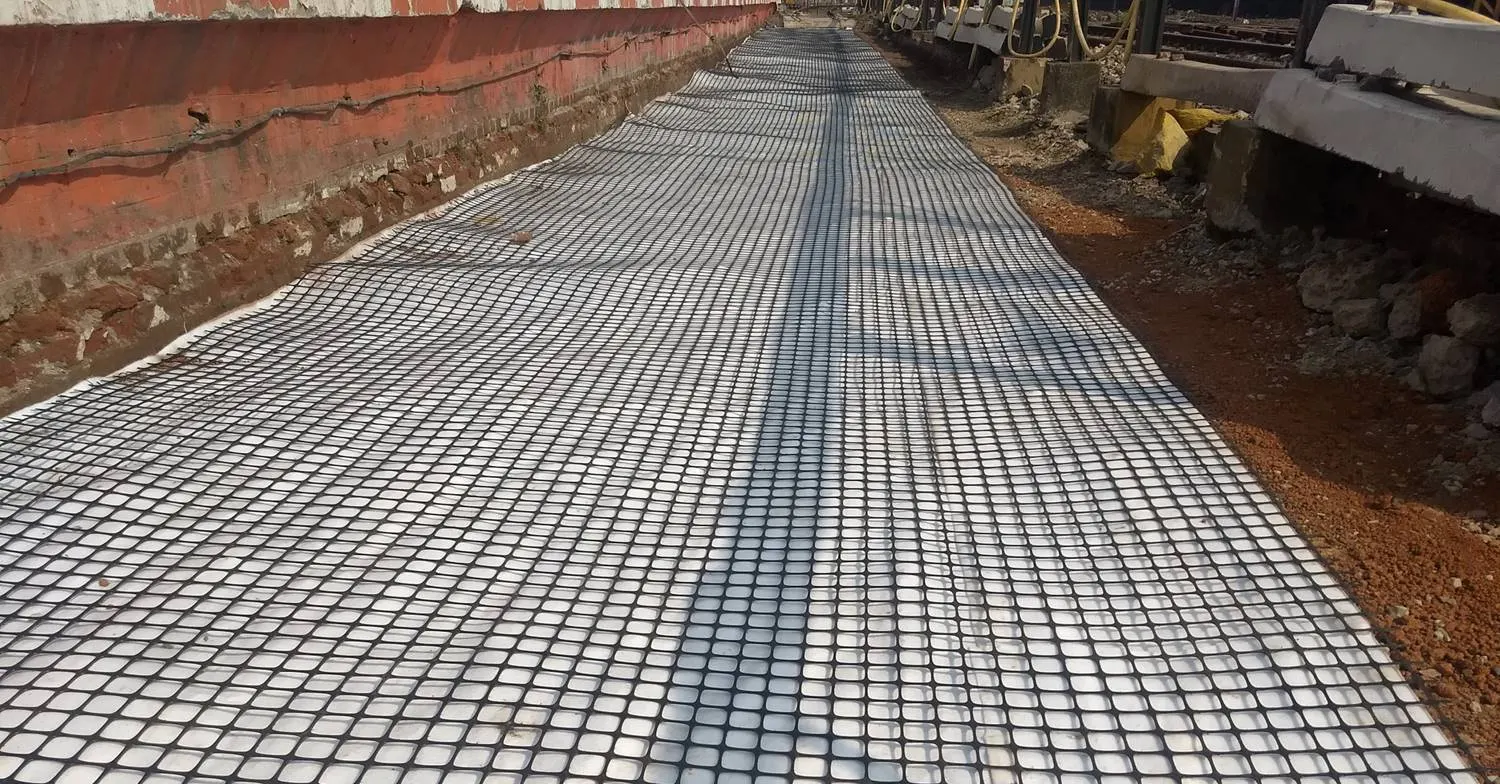
TechGrid PP Biaxial Geogrid and TechGeo Nonwoven Geotextile are commonly used. The geogrid reinforces the foundation and improves load distribution, while the geotextile provides separation and filtration between soil and granular layers.
A biaxial geogrid reinforces weak subgrades and distributes train loads more evenly through the track foundation. This reduces stress concentrations and allows the blanket layer to be designed with reduced thickness.
A nonwoven geotextile separates granular blanket material from the underlying soil and prevents fine soil migration into the granular layer. It also helps maintain drainage efficiency within the track structure.
Yes. When designed appropriately, geosynthetic reinforcement maintains the required structural performance and long-term track stability while reducing the required blanket thickness.
It is widely used in new railway track construction, weak subgrade improvement, heavy-haul rail corridors, and high-speed rail networks.
Yes. Geosynthetic reinforcement improves the stability and bearing capacity of weak subgrades, making it suitable for projects where conventional blanket layers would otherwise need to be thicker.
Key benefits include optimised blanket layer thickness, reduced consumption of granular material, and faster project execution.
By reducing the volume of granular material required, geosynthetics lower material, hauling, and placement costs. Faster construction also contributes to overall project savings.
No. When a suitable nonwoven geotextile is used, separation and filtration functions are maintained. This prevents soil migration and helps preserve effective drainage within the track foundation.
Yes. It can be used in high-speed rail networks where consistent foundation performance, controlled settlement, and long-term track stability are essential.
Yes. Geosynthetic reinforcement is particularly valuable in heavy-haul corridors, where repeated heavy axle loads place high demands on the track foundation.
Yes. By reducing granular material consumption and construction time, blanket layer thickness reduction helps deliver more resource-efficient and sustainable railway infrastructure.