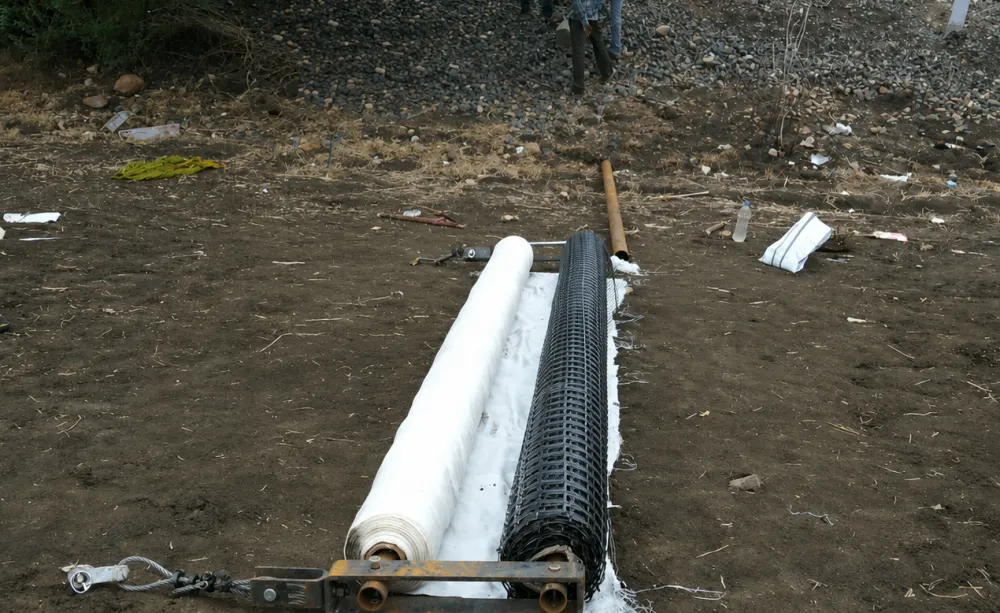
Geosynthetics improve track bed performance by reinforcing the ballast and stabilising the underlying formation. This results in enhanced load distribution, reduced settlement, and extended track service life. These systems strengthen weak subgrades, minimise ballast degradation under repeated train loading, and improve the overall structural stability of railway tracks.
They are widely used to reinforce ballast layers, stabilise track beds over weak formations, improve the performance of heavy-haul rail corridors, and reduce maintenance requirements while ensuring long-term track stability.
Overview
Products
Success Stories
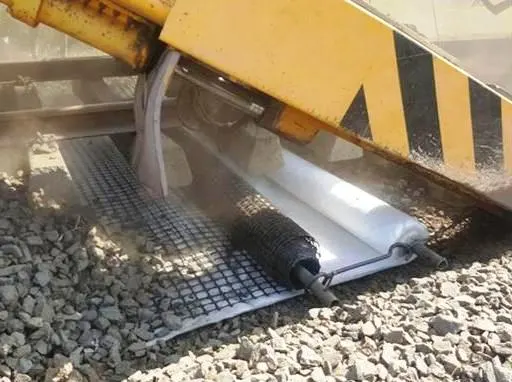
Track bed stabilisation is essential for improving the structural performance of railway foundations, particularly over weak formations and under repetitive train loading. TechFab provides engineered geosynthetic solutions that reinforce the ballast layer, enhance load distribution, and improve the overall stability of the track structure—often without the need for extensive ground improvement.
By confining ballast and reinforcing the underlying formation, these systems help distribute train loads more evenly, reduce stress concentrations, and limit deformation of the track bed. This results in reduced settlement, minimised ballast degradation, and improved resistance to differential settlement under repeated axle loads.
These solutions are widely used in new railway construction, track rehabilitation, and heavy-haul rail corridors. They help lower maintenance and tamping requirements, extend track service life, and ensure reliable, cost-effective, and long-term railway performance.
Track bed stabilisation is the use of engineered geosynthetic solutions to reinforce the ballast layer and stabilise the underlying railway formation. It improves load distribution, reduces settlement, and enhances the structural performance of the track.
Railway tracks are subjected to repeated train loading, which can cause ballast degradation, settlement, and track deformation. Stabilisation improves the strength and stability of the track bed, particularly over weak formations.
Geosynthetics reinforce the ballast and stabilise the underlying formation by improving load distribution and reducing stress concentrations. This helps limit track bed deformation and improves long-term structural stability.
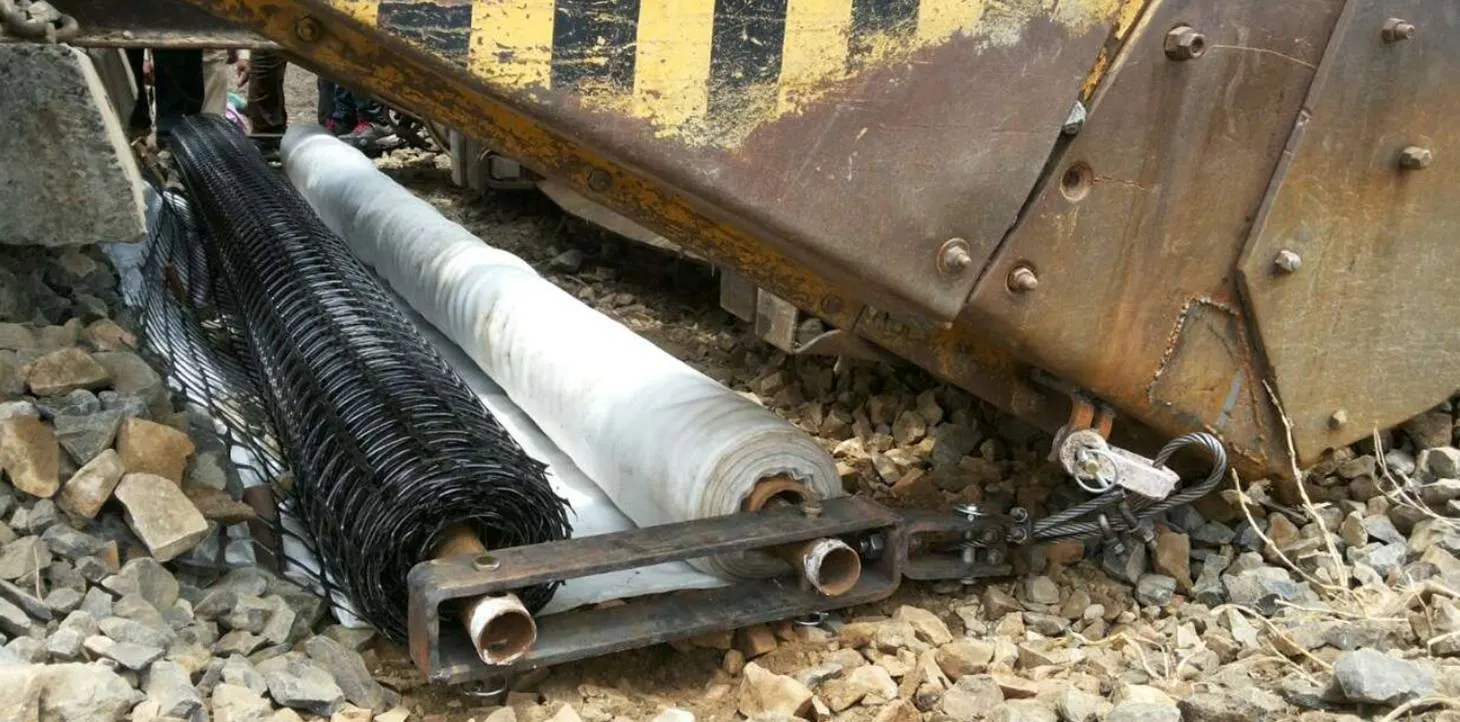
TechGrid PP Biaxial Geogrid and TechGeo Nonwoven Geotextile are commonly used. The geogrid reinforces and confines the ballast, while the geotextile provides separation, filtration, and protection functions.
A biaxial geogrid improves ballast confinement and load distribution. It helps transfer train loads more evenly through the track structure, reducing settlement and ballast movement.
A nonwoven geotextile separates the ballast from the underlying subgrade, prevents soil migration, and maintains drainage efficiency. This helps preserve the integrity and performance of the track bed.
Yes. These systems are specifically used to improve the bearing capacity and stability of weak formations, helping reduce settlement and track deformation without extensive ground improvement.
Yes. It is particularly beneficial for heavy-haul rail corridors, where repeated heavy axle loads increase the risk of ballast degradation, settlement, and maintenance requirements.
By confining the ballast and reducing its lateral movement under train loading, geosynthetics minimise abrasion, particle breakdown, and ballast contamination. This helps maintain track geometry for longer.
Yes. Improved ballast confinement and reduced settlement can lower tamping frequency and overall maintenance requirements, helping reduce lifecycle costs.
Key benefits include enhanced bearing capacity of weak formations, reduced ballast degradation and maintenance frequency, and minimised differential settlement and track deformation.
Yes. By reducing settlement, ballast degradation, and deformation, track bed stabilisation helps extend the service life of railway tracks and supports reliable long-term performance.